
Key findings
- 1The nooks-and-crannies texture was originally created by slow sourdough fermentation and griddle cooking
- 2Thomas' English Muffins list calcium sulfate and sorbic acid among their ingredients
- 3Homemade or bakery English muffins with flour, water, yeast, milk, butter, and salt are far less processed
- 4In our analysis, English muffins average a Processing Score of 8.8, which is Level 4
Why is English Muffins ultra-processed on average?
Traditional English muffins are a griddle bread: rounds of yeast-risen dough are cooked on a flat griddle (not baked in an oven), which creates the distinctive flat shape and slightly charred exterior. The porous interior texture historically came from a wet, slack dough with sourdough starter that created large, irregular air pockets during fermentation. Commercial production replaces the slow fermentation with fast-acting chemical leaveners and dough conditioners (calcium sulfate, monocalcium phosphate, DATEM) to replicate the texture at production speed. Thomas' English Muffins list calcium sulfate, sorbic acid, and soy lecithin among their ingredients. In our analysis, English muffins average a Processing Score of 8.8, which is Level 4.
How 330 english muffins products break down
Share of products at each processing level, in our analysis.
English Muffins brand comparison
From least to most processed in our database.
How to read a english muffins label
- 1
Traditional English muffins need only flour, water, yeast, salt, milk, and butter
- 2
Calcium sulfate and monocalcium phosphate are chemical leavening agents used to speed production
- 3
Sorbic acid is a preservative, homemade English muffins wouldn't need it
- 4
Look for bakery or artisan English muffins with 6-8 ingredients
Ketzal for iPhone
Got English Muffins At Home?
Scan yours in Ketzal to see how your exact product scores, not just the average, plus a less processed swap.
Scan It Free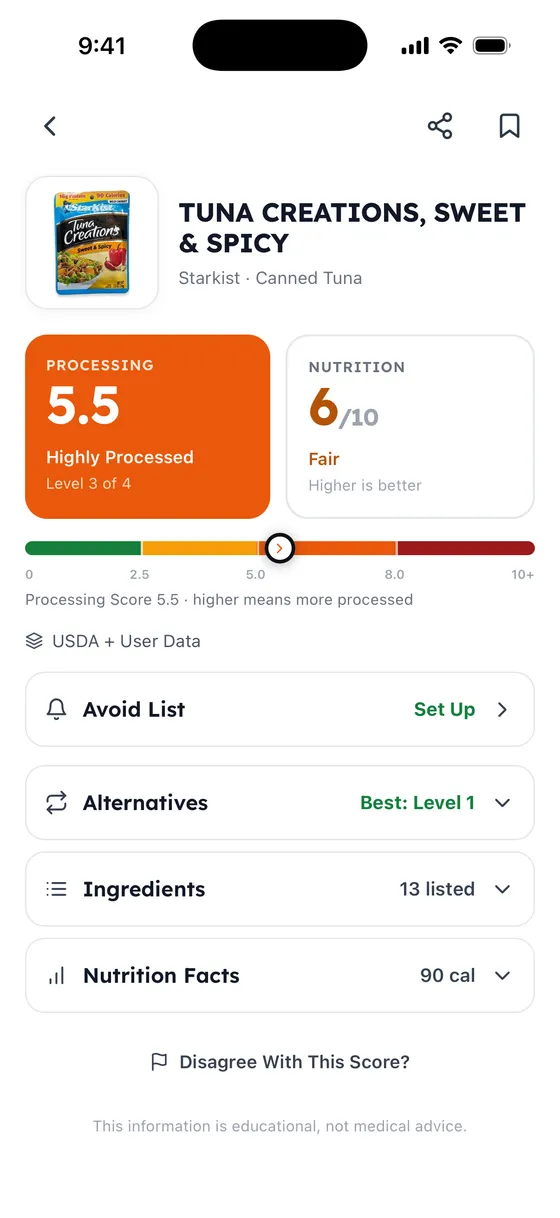
Frequently asked questions
Are Thomas' English Muffins ultra-processed?
Thomas' English Muffins list calcium sulfate, sorbic acid, and soy lecithin among their ingredients, which makes them more processed than homemade. Each product page shows its own score.
How are English muffins different from regular bread?
English muffins are griddle-cooked (not oven-baked), which creates their flat shape. The porous interior comes from a wetter dough traditionally fermented with sourdough starter. This distinct cooking method makes them a different category from sliced bread.
What creates the nooks and crannies?
In traditional English muffins, a wet sourdough-leavened dough creates large, irregular gas bubbles during fermentation. Griddle cooking sets the exterior while the interior stays airy. Commercial versions use chemical leaveners and conditioners to approximate this texture more quickly.
Guide · Bread & Grains
The Complete Bread & Grains Guide
Processing analysis, least-processed picks, and what to watch for.
Read guide