
Key findings
- 1Butter with just cream and salt is one of the simplest dairy products
- 2In our analysis, butter averages a Processing Score of 4.2, which is Level 2
- 3Margarine is far more processed, requiring industrial processes to solidify vegetable oils
- 4Spreads such as "I Can't Believe It's Not Butter" carry a far longer ingredient list than butter's cream and salt
Why is Butter Level 2 on average?
Butter production is one of the oldest food processing methods: cream is agitated until butterfat separates from buttermilk. The butterfat is collected, washed, and salted. No chemicals, additives, or industrial processes are needed. The industrial alternative (margarine) requires hydrogenation or interesterification of vegetable oils, emulsifiers, colorants (beta-carotene), and artificial butter flavoring.
How 2,100 butter products break down
Share of products at each processing level, in our analysis.
Butter brand comparison
From least to most processed in our database.
How to read a butter label
- 1
Real butter lists: cream, salt (or just cream for unsalted)
- 2
Margarine lists a longer set of ingredients including emulsifiers and artificial flavors
- 3
"Butter spread" or "butter blend" mixes butter with vegetable oils and is more processed than butter
- 4
Grass-fed butter has the same simple ingredients with potentially different nutrient profile
Ketzal for iPhone
Got Butter At Home?
Scan yours in Ketzal to see how your exact product scores, not just the average, plus a less processed swap.
Scan It Free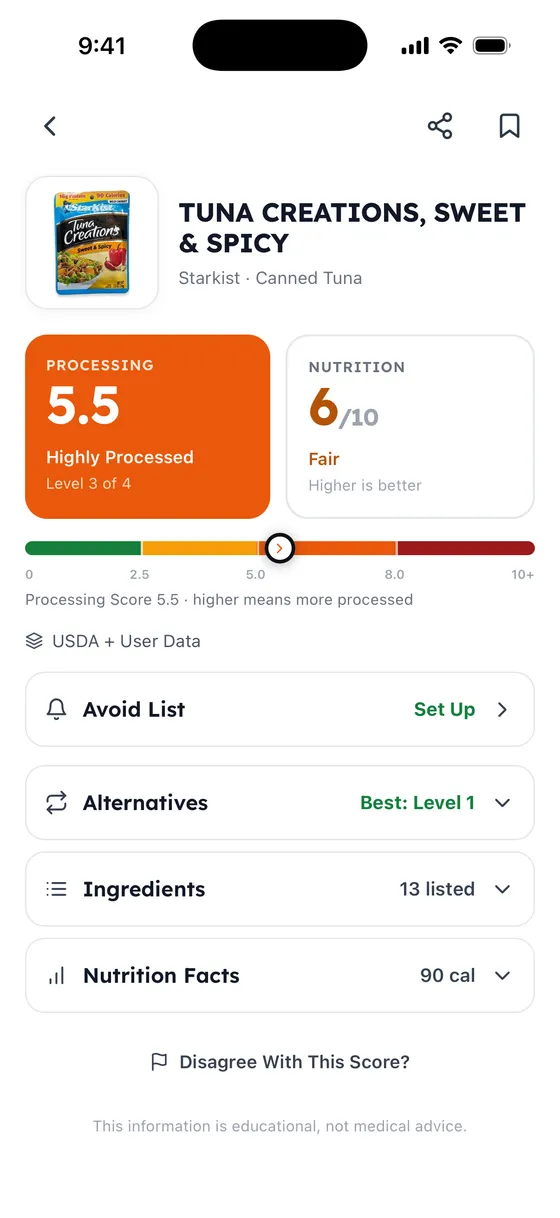
Frequently asked questions
Is butter healthier than margarine from a processing standpoint?
Butter is cream and salt. Margarine is hydrogenated or interesterified oils plus emulsifiers and flavoring. From a processing perspective, butter is dramatically simpler.
Is ghee less processed than butter?
Ghee is butter with the milk solids removed through gentle heating. It adds one simple processing step. No additives are needed.