
Key findings
- 1Traditional cream cheese is a simple acid-set cheese, but most grocery brands add three hydrocolloid stabilizers on top of that simple base
- 2In our analysis, cream cheese averages a Processing Score of 5.7, which is Level 3
- 3The stabilizer gums prevent whey separation; the watery liquid you sometimes see on top of natural cream cheese is actually a sign of less processing
- 4Neufchatel cheese is a lower-fat alternative with a nearly identical ingredient list
Why is Cream Cheese Level 3 on average?
The original 1872 cream cheese recipe from Chester, New York was simply cream coagulated with a lactic acid culture and drained. No gums or stabilizers were needed because the product was sold fresh and consumed quickly. Modern shelf-life demands changed that: guar gum (from guar beans), carob bean gum (from carob seeds), and xanthan gum (produced by bacterial fermentation of sugar) are added to prevent whey separation during weeks of refrigerated storage. These hydrocolloids are individually mild processing indicators, but together they move most commercial cream cheese beyond a traditional cheese. Philadelphia Original, for instance, lists pasteurized milk and cream, cheese culture, salt, and stabilizers. In our analysis, cream cheese averages a Processing Score of 5.7, which is Level 3.
How 1,037 cream cheese products break down
Share of products at each processing level, in our analysis.
Cream Cheese brand comparison
From least to most processed in our database.
How to read a cream cheese label
- 1
Traditional cream cheese needs only four ingredients: cream, milk, cheese culture, salt
- 2
Guar gum, carob bean gum, and xanthan gum are the stabilizer trio that signals industrial production
- 3
Whipped cream cheese adds air to reduce calories per serving but uses the same stabilizers
- 4
Flavored cream cheese (chive, strawberry) adds another layer of processing with natural flavors and colorings
Ketzal for iPhone
Got Cream Cheese At Home?
Scan yours in Ketzal to see how your exact product scores, not just the average, plus a less processed swap.
Scan It Free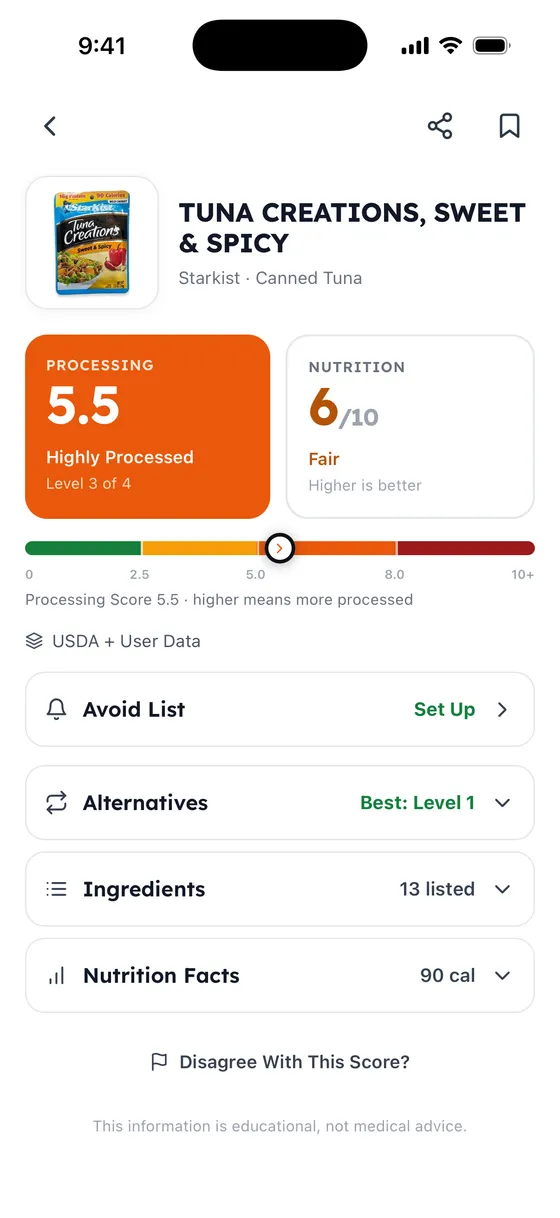
Frequently asked questions
Is Philadelphia cream cheese ultra-processed?
Philadelphia Original lists pasteurized milk and cream, cheese culture, salt, and stabilizers (carob bean gum, xanthan gum, guar gum). The stabilizers take it beyond a simple cheese. In our analysis, cream cheese as a group averages Level 3; each Philadelphia product page shows its own score.
What is the least processed cream cheese?
Look for brands listing only cream, cultures, and salt and no gums. Some organic and artisan brands achieve this. Alternatively, homemade cream cheese requires only heavy cream, lemon juice, and salt.
Is Neufchatel cheese the same as cream cheese?
Neufchatel is a lower-fat version (about one-third less fat) with a nearly identical ingredient list and processing level. It is not less processed, just made with a higher milk-to-cream ratio.
Guide · Dairy & Alternatives
The Complete Dairy & Alternatives Guide
Processing analysis, least-processed picks, and what to watch for.
Read guide