
Key findings
- 1At its simplest, cottage cheese is milk, acid, and salt; many brands add thickeners or preservatives to the dressing, so read the label
- 2In our analysis, cottage cheese averages a Processing Score of 7.5, which is Level 3
- 3At 11-14g protein per half cup, cottage cheese has driven a protein-food trend that rewards clean labels
- 4The visible curds are just casein protein that coagulated when the milk was acidified: a natural process, not a manufacturing trick
Why is Cottage Cheese Level 3 on average?
Cottage cheese is one of the simplest cheeses to manufacture: milk is warmed, acidified (either with vinegar, lactic acid, or bacterial cultures), and the resulting curds are cut, drained, and washed. A light cream dressing is mixed in for flavor and texture. The entire process is essentially controlled spoilage, the same principle behind yogurt and buttermilk. Its recent surge in popularity as a high-protein food (11-14g per half cup) has put its labels under closer scrutiny. Some brands add guar gum, carrageenan or other thickeners to the cream dressing, and some add preservatives, so labels vary widely. In our analysis, cottage cheese averages a Processing Score of 7.5, which is Level 3.
How 786 cottage cheese products break down
Share of products at each processing level, in our analysis.
Cottage Cheese brand comparison
From least to most processed in our database.
How to read a cottage cheese label
- 1
The cleanest labels list: cultured skim milk, milk, cream, salt, that's it
- 2
Some brands add guar gum or locust bean gum to the cream dressing; minor but unnecessary
- 3
Watch for cottage cheese with modified food starch or artificial preservatives (potassium sorbate)
- 4
Fat percentage (1%, 2%, 4%) reflects cream content, not processing level
Ketzal for iPhone
Got Cottage Cheese At Home?
Scan yours in Ketzal to see how your exact product scores, not just the average, plus a less processed swap.
Scan It Free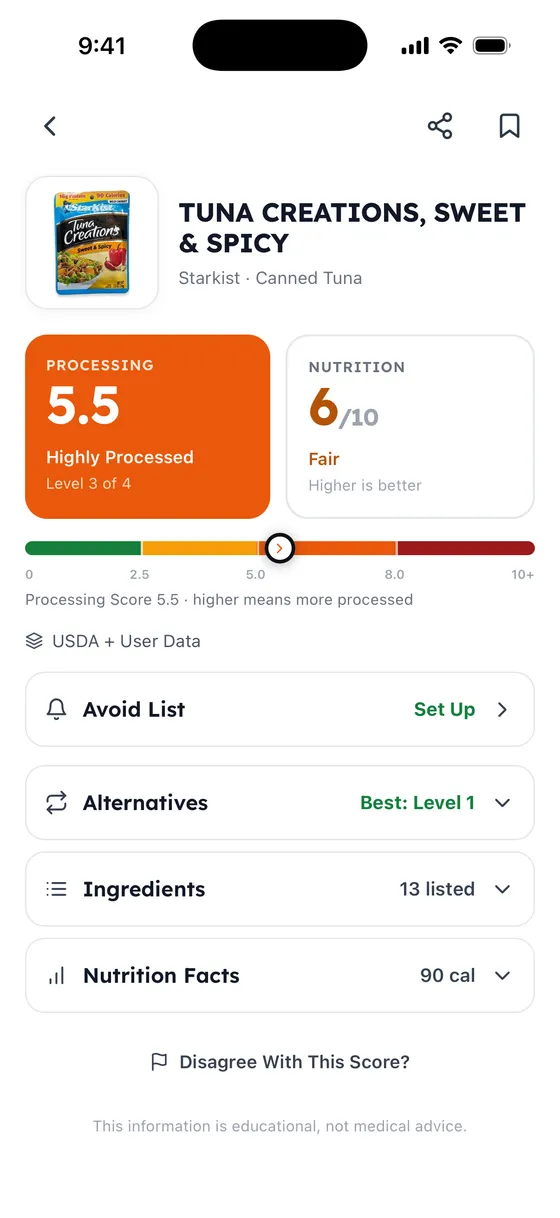
Frequently asked questions
Is cottage cheese healthier than yogurt?
From a processing standpoint, plain cottage cheese and plain yogurt are both simple cultured dairy foods when the label is short. Cottage cheese typically has more protein (11-14g vs 5-8g per serving) and less sugar. Added gums or preservatives make either one more processed, so compare labels.
Why is cottage cheese so popular now?
The high protein-to-calorie ratio and short ingredient list appeal to health-conscious consumers. The simplest cottage cheese has just a few ingredients, though many brands add thickeners or preservatives. In our analysis, cottage cheese averages 13.8 ingredients.
Is low-fat cottage cheese more processed?
No. Low-fat cottage cheese simply uses skim milk instead of whole milk. The processing method is identical. Check labels for added thickeners; some low-fat versions add gums to compensate for the thinner texture.
Guide · Dairy & Alternatives
The Complete Dairy & Alternatives Guide
Processing analysis, least-processed picks, and what to watch for.
Read guide