
Key findings
- 1Block Parmesan is made from just milk, cultures, salt, and rennet, aged through natural biochemical processes
- 2Pre-grated Parmesan often contains added cellulose (anti-caking) and potassium sorbate (preservative), making it more processed
- 3Extended aging (12-36 months) develops flavor and texture through natural enzymatic reactions, not artificial means
Why is Parmesan Cheese Level 2 on average?
Authentic Parmigiano-Reggiano and domestic Parmesan are both produced through traditional cheesemaking: milk is coagulated with rennet, the curds are pressed and shaped, and the wheels are aged for extended periods (12-36 months for authentic Parmigiano). This aging process develops the characteristic hard texture, crystalline granules, and complex flavor through natural enzymatic and biochemical reactions. The transformation is substantial but entirely biological, involving no synthetic additives or industrial chemicals.
How 814 parmesan cheese products break down
Share of products at each processing level, in our analysis.
Parmesan Cheese brand comparison
From least to most processed in our database.
How to read a parmesan cheese label
- 1
Look for "milk, cultures, salt, enzymes" as the ingredient list for block or wedge Parmesan; the simplest form
- 2
Check pre-grated Parmesan for added cellulose powder (an anti-caking agent) and potassium sorbate (preservative), which increase processing
- 3
Note the difference between "Parmigiano-Reggiano" (protected designation) and generic "Parmesan", and both are processed similarly but may differ in aging and quality
- 4
Watch for products labeled "Parmesan flavored" or Parmesan in a shelf-stable shaker, which may contain significant additives
Ketzal for iPhone
Got Parmesan Cheese At Home?
Scan yours in Ketzal to see how your exact product scores, not just the average, plus a less processed swap.
Scan It Free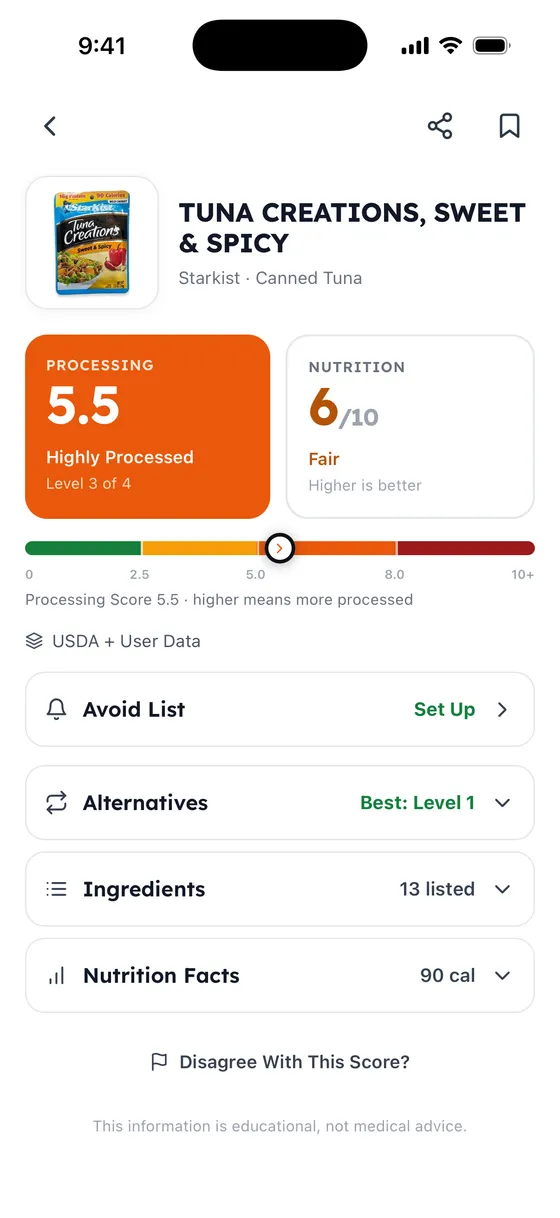
Frequently asked questions
Is Parmesan cheese processed?
Parmesan is made through traditional cheesemaking and extended aging. Block Parmesan contains just milk, cultures, salt, and enzymes. Pre-grated versions may include additional anti-caking agents and preservatives. In our analysis, Parmesan products average a Processing Score of 4.1, which is Level 2.
Is pre-grated Parmesan more processed than block?
Yes, generally. Pre-grated Parmesan often contains cellulose powder as an anti-caking agent and potassium sorbate as a preservative. Block Parmesan has a simpler ingredient list.
What is the difference between Parmesan and Parmigiano-Reggiano?
Parmigiano-Reggiano is a protected designation cheese produced in specific Italian regions following strict standards. Generic Parmesan is made in a similar style but without the same geographic or production restrictions. Both use traditional cheesemaking methods.
Why is Parmesan aged so long?
Aging allows natural enzymes to break down proteins and fats, developing the characteristic sharp flavor, hard texture, and crystalline granules. Authentic Parmigiano-Reggiano is aged a minimum of 12 months, often 24-36 months.