
Key findings
- 1Authentic boiled-then-baked bagels need only five or six ingredients
- 2In our analysis, bagels average a Processing Score of 9.0, which is Level 4
- 3L-cysteine, a common dough relaxer in commercial bagels, is often derived from duck feathers or human hair
- 4A real New York-style bagel should be dense and chewy; softness indicates more processing
Why is Bagels ultra-processed on average?
The boiling step is what defines a real bagel. Submerging the shaped dough in boiling water (often with malt barley syrup) for 30-60 seconds gelatinizes the starch on the surface, creating the characteristic dense, chewy crust that distinguishes a bagel from round bread. Most mass-produced bagels eliminate this labor-intensive step and instead use steam injection along with dough conditioners (DATEM, sodium stearoyl lactylate), enzyme-modified ingredients, and L-cysteine (an amino acid dough relaxer often derived from duck feathers or human hair) to approximate the texture. The result is softer and puffier than a true boiled bagel. In our analysis, bagels average a Processing Score of 9.0, which is Level 4.
How 821 bagels products break down
Share of products at each processing level, in our analysis.
Bagels brand comparison
From least to most processed in our database.
How to read a bagels label
- 1
A real bagel needs only high-gluten flour, water, malt barley syrup, yeast, and salt
- 2
L-cysteine (dough conditioner) in commercial bagels can be derived from duck feathers
- 3
If the bagel is very soft and light, it was likely steamed, not boiled
- 4
DATEM and sodium stearoyl lactylate indicate an industrial shortcut process
Ketzal for iPhone
Got Bagels At Home?
Scan yours in Ketzal to see how your exact product scores, not just the average, plus a less processed swap.
Scan It Free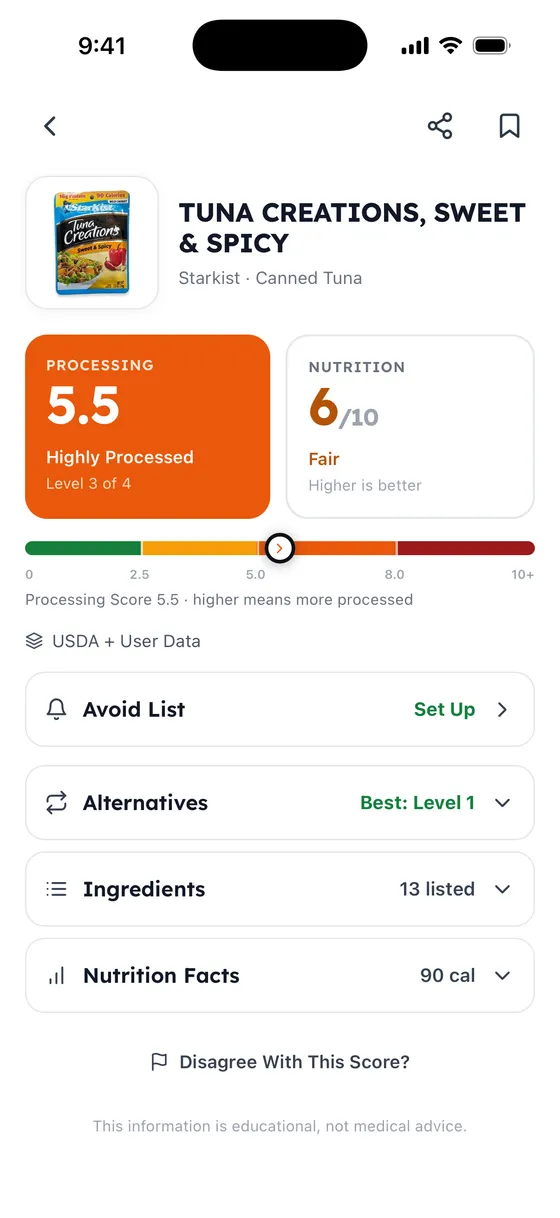
Frequently asked questions
Why are some bagels so much chewier than others?
Chewy bagels are boiled before baking; the traditional method. The boiling gelatinizes surface starch, creating a dense crust. Soft, fluffy bagels are typically steamed and use dough conditioners instead, which is a more processed approach.
Are whole wheat bagels less processed?
Not necessarily. Whole wheat bagels use whole wheat flour but often contain the same dough conditioners as white bagels. The flour type affects nutrition, but processing level depends on the full ingredient list.
What is L-cysteine in bagels?
L-cysteine is an amino acid used as a dough relaxer to make shaping easier in industrial production. It is commonly sourced from duck feathers or synthesized. It replaces the need for proper dough resting time in mass production.
Guide · Bread & Grains
The Complete Bread & Grains Guide
Processing analysis, least-processed picks, and what to watch for.
Read guide