
Key findings
- 1Real sourdough, made from flour, water, salt and starter, is among the least processed breads available
- 2In our analysis, sourdough breads average a Processing Score of 6.3, which is Level 3
- 3The long fermentation acts as natural preservation with no calcium propionate needed
- 4Many grocery store "sourdough" breads use flavoring, not actual fermentation
Why is Sourdough Bread Level 3 on average?
Sourdough fermentation is a 6,000-year-old process where wild Lactobacillus bacteria and yeast naturally leaven bread over 12-24 hours. This long fermentation breaks down phytic acid, produces organic acids (natural preservation), and develops complex flavors without any additives. Commercial shortcuts use "sourdough flavoring" (citric acid + yeast) to mimic the taste without the fermentation. In our analysis, sourdough breads average a Processing Score of 6.3, which is Level 3. Commercial loaves vary widely, so check the label.
How 378 sourdough bread products break down
Share of products at each processing level, in our analysis.
Sourdough Bread brand comparison
From least to most processed in our database.
How to read a sourdough bread label
- 1
Real sourdough lists: flour, water, salt, sourdough culture/starter
- 2
Watch for loaves listing "sourdough flavor," yeast, and preservatives together
- 3
True sourdough has a shorter shelf life (3-5 days) than commercial bread
- 4
If yeast is listed alongside "sourdough," it's not a true sourdough process
Ketzal for iPhone
Got Sourdough Bread At Home?
Scan yours in Ketzal to see how your exact product scores, not just the average, plus a less processed swap.
Scan It Free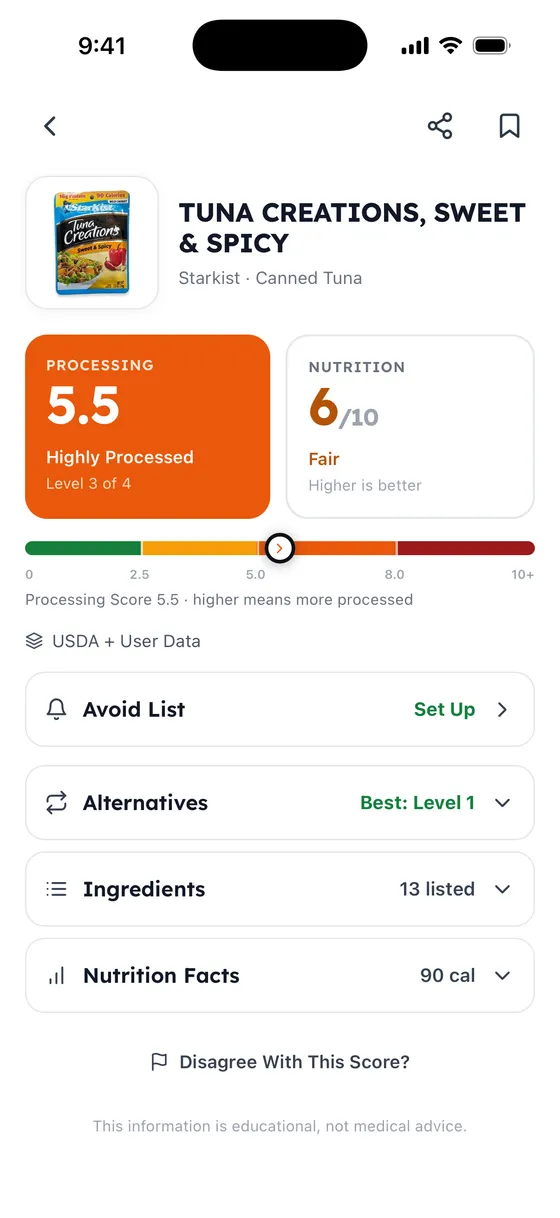
Frequently asked questions
How can I tell if sourdough is real?
Real sourdough lists only flour, water, salt, and sourdough culture. It should NOT list commercial yeast, preservatives, or "sourdough flavor." A shorter shelf life (3-5 days) also indicates genuine sourdough.
Is San Francisco sourdough different?
San Francisco sourdough uses local wild yeast strains (Lactobacillus sanfranciscensis) that give it a distinctive tang. The process is the same as any real sourdough; just different local microbes.
Guide · Bread & Grains
The Complete Bread & Grains Guide
Processing analysis, least-processed picks, and what to watch for.
Read guide