
Key findings
- 1Peanut butter with just peanuts and salt is one of the simplest spreads
- 2Jif lists sugar, hydrogenated oils, and mono/diglycerides
- 3In our analysis, peanut butter averages a Processing Score of 3.3, which is Level 2
- 4Oil separation is a sign of quality, not a defect, because it means no stabilizers were added
Why is Peanut Butter Level 2 on average?
Natural peanut butter involves one process: grinding roasted peanuts. The oil separation on top is natural and a sign of minimal processing. Commercial brands add fully hydrogenated vegetable oils (palm, rapeseed) to prevent oil separation, sugar for sweetness, and mono/diglycerides as emulsifiers. These additives transform a single-ingredient food into a shelf-stable industrial product.
How 1,948 peanut butter products break down
Share of products at each processing level, in our analysis.
Peanut Butter brand comparison
From least to most processed in our database.
How to read a peanut butter label
- 1
Ideal ingredient list: peanuts and salt, nothing else
- 2
Oil separation on top means minimal processing; stir and refrigerate
- 3
"No stir" peanut butters use hydrogenated oils to prevent separation, which means more processing
- 4
Palm oil in peanut butter serves as a stabilizer, not a necessary ingredient
Ketzal for iPhone
Got Peanut Butter At Home?
Scan yours in Ketzal to see how your exact product scores, not just the average, plus a less processed swap.
Scan It Free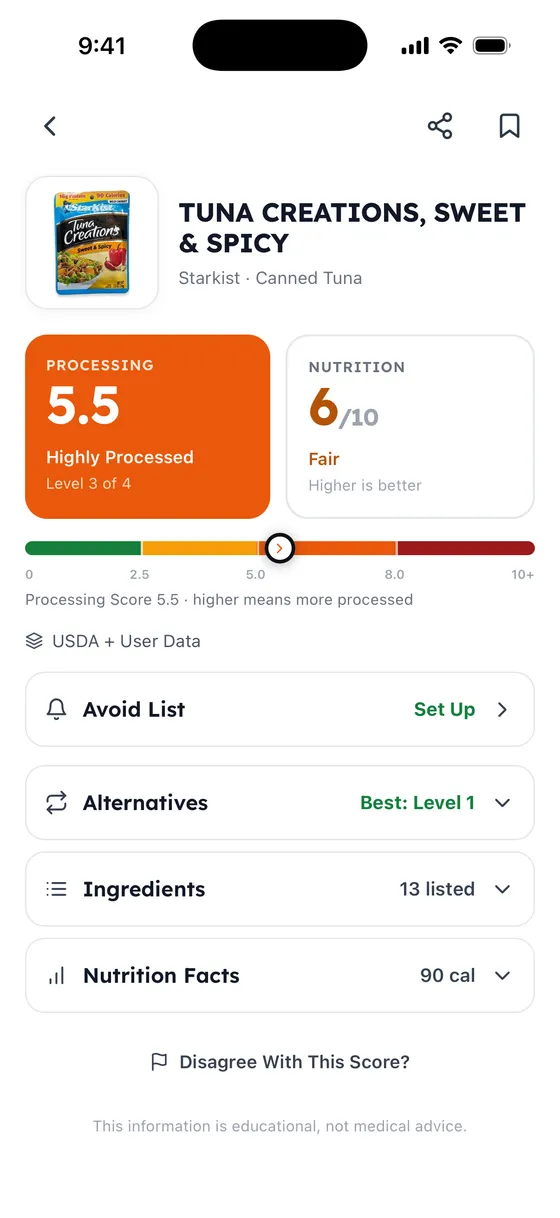
Frequently asked questions
Is Jif peanut butter ultra-processed?
Jif lists added sugar, fully hydrogenated vegetable oils (rapeseed and soybean), and mono- and diglycerides. Natural peanut butter with just peanuts and salt is a far less processed alternative.
Why does natural peanut butter separate?
Oil separation is natural; peanuts are 50% fat. The oil rises to the top without emulsifiers to bind it. Simply stir it back in. This separation is actually a sign of minimal processing.