
Key findings
- 1Raw local honey is essentially unprocessed food
- 2In our analysis, honey averages a Processing Score of 1.2, which is Level 1
- 3Crystallization is natural and does not indicate spoilage or processing
- 4Some imported honey is adulterated with high fructose corn syrup; buy from known sources
Why is Honey Level 1 on average?
Bees produce honey through a natural enzymatic process (invertase converts nectar sucrose into glucose and fructose). Human processing of honey ranges from none (raw comb honey) to extraction and straining (removing wax particles), to ultra-filtration (removing pollen, which also removes traceability) and heating (for easier bottling and to prevent crystallization). Some imported honey has been adulterated with corn syrup.
How 1,704 honey products break down
Share of products at each processing level, in our analysis.
Honey brand comparison
From least to most processed in our database.
How to read a honey label
- 1
"Raw" honey has not been heated above hive temperature (~95F)
- 2
Ultra-filtered honey has had pollen removed, which makes its origin untraceable
- 3
Single-origin honey is more likely to be genuinely unprocessed
- 4
Watch for honey listing any ingredients besides "honey", adulteration with corn syrup occurs
Ketzal for iPhone
Got Honey At Home?
Scan yours in Ketzal to see how your exact product scores, not just the average, plus a less processed swap.
Scan It Free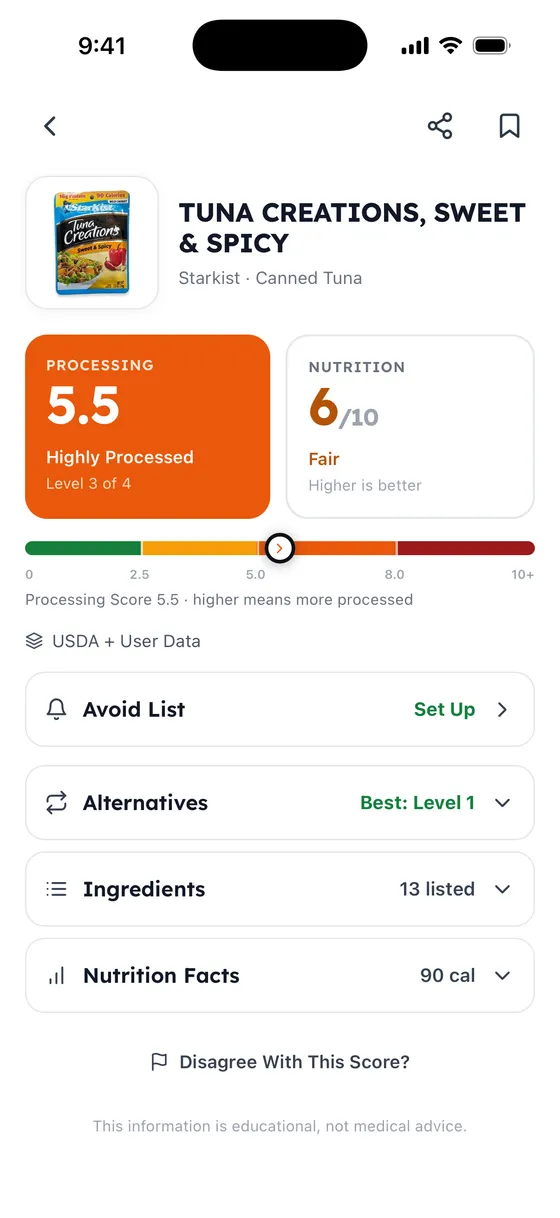
Frequently asked questions
Is store-bought honey ultra-processed?
In our analysis, honey averages a Processing Score of 1.2, which is Level 1. Most store-bought honey has been extracted, strained, and possibly heated for bottling. This is minimal processing. However, some cheap blended honey may be adulterated with corn syrup.
Is raw honey better than regular honey?
From a processing standpoint, raw honey is unheated and unfiltered, while regular commercial honey is heated and filtered. The processing difference is minimal for pure honey.