
Key findings
- 1Commercial almond milk is ~98% water with thickeners and fortified vitamins
- 2Homemade almond milk (almonds + water) is dramatically simpler
- 3In our analysis, almond milks average a Processing Score of 5.5, which is Level 3
- 4Oat milk typically uses more additives than almond milk for its creamier texture
Why is Almond Milk Level 3 on average?
Making almond milk from scratch requires only almonds and water. Commercial production adds processing: almonds are blanched (skins removed), ground with water, strained, then stabilized with gums to prevent separation. Most brands add sunflower lecithin (emulsifier), gellan gum or carrageenan (stabilizers), and fortified calcium/vitamins. The final product is typically only 2% almonds by weight. In our analysis, almond milks average a Processing Score of 5.5, which is Level 3.
How 116 almond milk products break down
Share of products at each processing level, in our analysis.
Almond Milk brand comparison
From least to most processed in our database.
How to read a almond milk label
- 1
Simpler brands list: almonds, water, salt, and vitamin blend
- 2
Watch for carrageenan, a seaweed-derived thickener; some brands use gellan gum instead
- 3
Most almond milk contains only 2% almonds; the rest is thickened water
- 4
"Unsweetened" versions avoid added sugar but still contain stabilizers
Ketzal for iPhone
Got Almond Milk At Home?
Scan yours in Ketzal to see how your exact product scores, not just the average, plus a less processed swap.
Scan It Free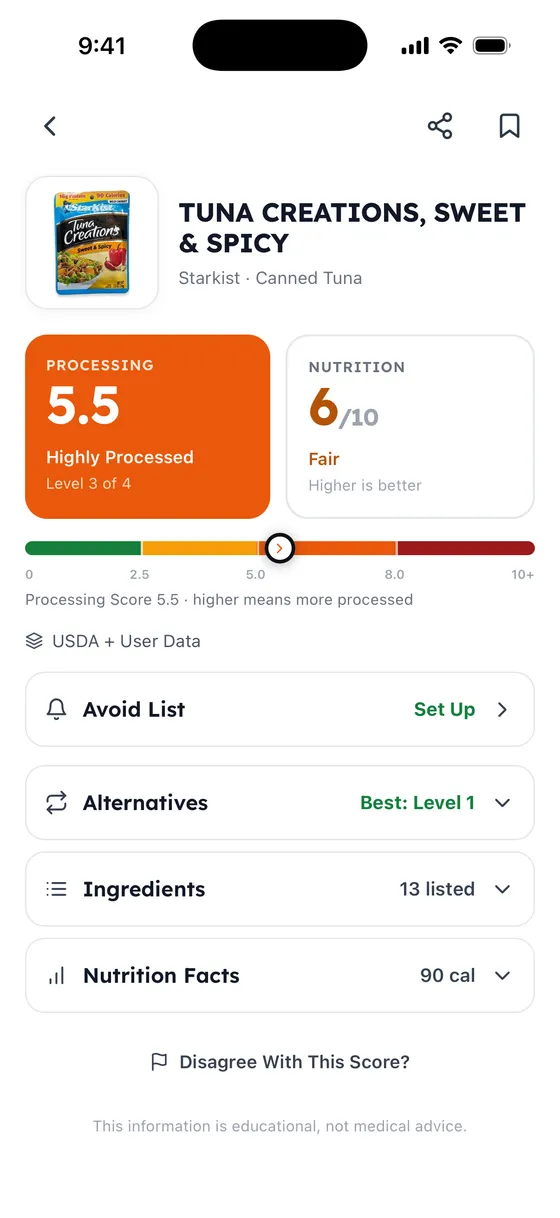
Frequently asked questions
Is almond milk healthier than cow's milk?
Different trade-offs. Almond milk is lower in calories and fat but is more processed than plain cow's milk, lower in protein, and requires added vitamins to match cow's milk nutrition.
Is homemade almond milk less processed?
Yes. Homemade almond milk (blended almonds + water, strained) has zero additives. Commercial versions add stabilizers and vitamins that homemade does not need for short-term use.