
Key findings
- 1Traditional soy milk (soybeans + water) has been made for over 2,000 years; it is the original plant milk
- 2At 7-9g protein per cup, soy milk is the only plant milk that naturally matches cow's milk in protein content
- 3Commercial soy milk adds fortification and stabilizers to a product that historically needed neither; the simplest brands still list only soybeans and water
- 4In our analysis, soy milk averages a Processing Score of 5.4, which is Level 3
Why is Soy Milk Level 3 on average?
Soy milk has been made for over 2,000 years by soaking soybeans, grinding them with water, boiling the slurry, and straining out the solids. This traditional process produces a naturally protein-rich (7-9g per cup) beverage with no additives. Modern commercial soy milk adds fortification (calcium carbonate, vitamin D, vitamin A, riboflavin) to match cow's milk nutrition, stabilizers (carrageenan or gellan gum) to prevent separation during weeks of shelf storage, and often cane sugar for palatability. The protein content is naturally high; unlike almond milk which is mostly thickened water, soy milk contains substantial nutrition from the bean itself. Unsweetened, stabilizer-free versions exist and are the closest to the traditional product. In our analysis, soy milk averages a Processing Score of 5.4, which is Level 3.
How 130 soy milk products break down
Share of products at each processing level, in our analysis.
Soy Milk brand comparison
From least to most processed in our database.
How to read a soy milk label
- 1
The simplest soy milks list: soybeans, water; that's it
- 2
Carrageenan is a common stabilizer; some consumers prefer to avoid it due to digestive concerns
- 3
Fortified vitamins (calcium carbonate, vitamin D) are added to match cow's milk nutrition
- 4
Sweetened varieties add 5-10g sugar per cup, check for "unsweetened" labels
Ketzal for iPhone
Got Soy Milk At Home?
Scan yours in Ketzal to see how your exact product scores, not just the average, plus a less processed swap.
Scan It Free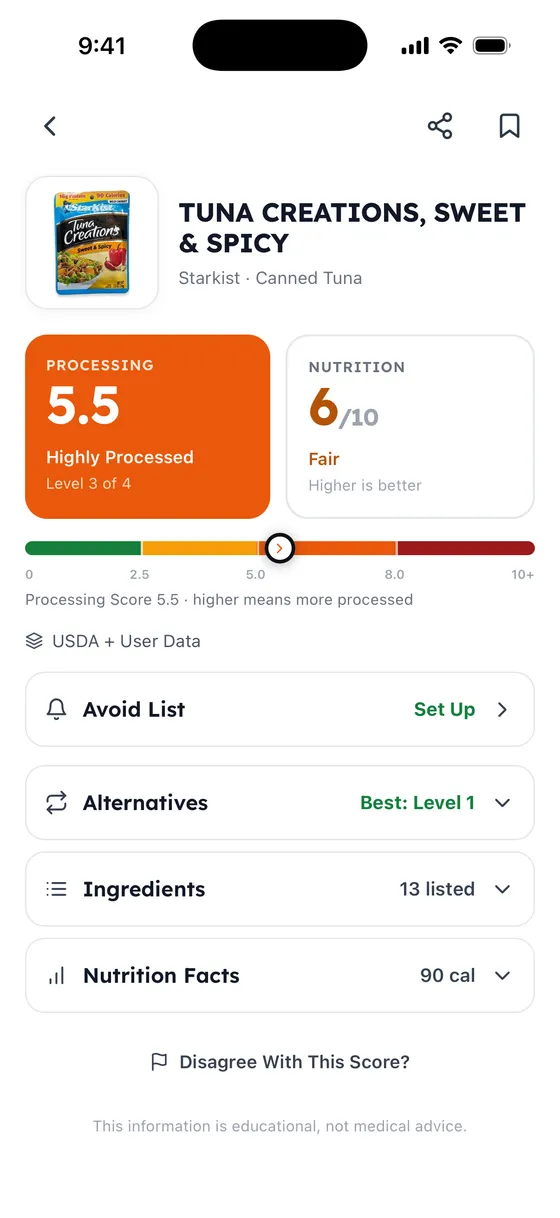
Frequently asked questions
Is soy milk more processed than almond milk?
Generally no. Simple soy milk lists only soybeans and water, while almond milk requires similar stabilizers plus the almonds contribute less nutrition (only 1g protein per cup vs 7-9g in soy). Commercial versions of both have similar additive profiles; search almond milk to see its own average.
Is soy milk safe to drink?
From a processing standpoint, simple soy milk is one of the least processed plant milks. The soy phytoestrogen concern has been extensively studied; major health organizations consider moderate soy consumption safe for most people. Processing level is not the primary health concern with soy milk.
What is the least processed soy milk?
Brands listing only "organic soybeans" and "water" are the least processed, and some Asian-market brands offer this simplicity. Most mainstream brands add stabilizers and vitamins.