
Key findings
- 1The enzymatic step that converts oat starch to sugar is the hidden processing that makes oat milk sweeter than oats, even "unsweetened" varieties contain these enzyme-created sugars
- 2Barista editions add vegetable oil (rapeseed/sunflower) and extra stabilizers to create milk-like foam
- 3Oatly Original lists ingredients including rapeseed oil, dipotassium phosphate, calcium carbonate, and gellan gum
Why is Oat Milk Level 2 on average?
Oat milk production involves soaking oats, blending with water, then treating with amylase enzymes that convert complex starches into simple sugars (maltose and glucose). This enzymatic hydrolysis is an industrial process that fundamentally changes the food's composition; it is why oat milk has a higher glycemic impact than whole oats. After enzyme treatment, the mixture is strained, and most brands add dipotassium phosphate (acidity regulator), calcium carbonate (fortification), gellan gum (stabilizer), and vitamins. Barista editions add rapeseed or sunflower oil for the fat content needed to create latte foam. In our analysis, oat milk averages 12.0 ingredients and a Processing Score of 5.0, which is Level 2.
How 123 oat milk products break down
Share of products at each processing level, in our analysis.
Oat Milk brand comparison
From least to most processed in our database.
How to read a oat milk label
- 1
The sweetness in "unsweetened" oat milk comes from enzymatic starch breakdown, not added sugar
- 2
Barista blends add rapeseed or sunflower oil for fat content, check if you need the extra oil
- 3
Dipotassium phosphate is an acidity regulator present in most brands
- 4
Homemade oat milk (oats and water, blended and strained) skips the enzymes and is far less processed
Ketzal for iPhone
Got Oat Milk At Home?
Scan yours in Ketzal to see how your exact product scores, not just the average, plus a less processed swap.
Scan It Free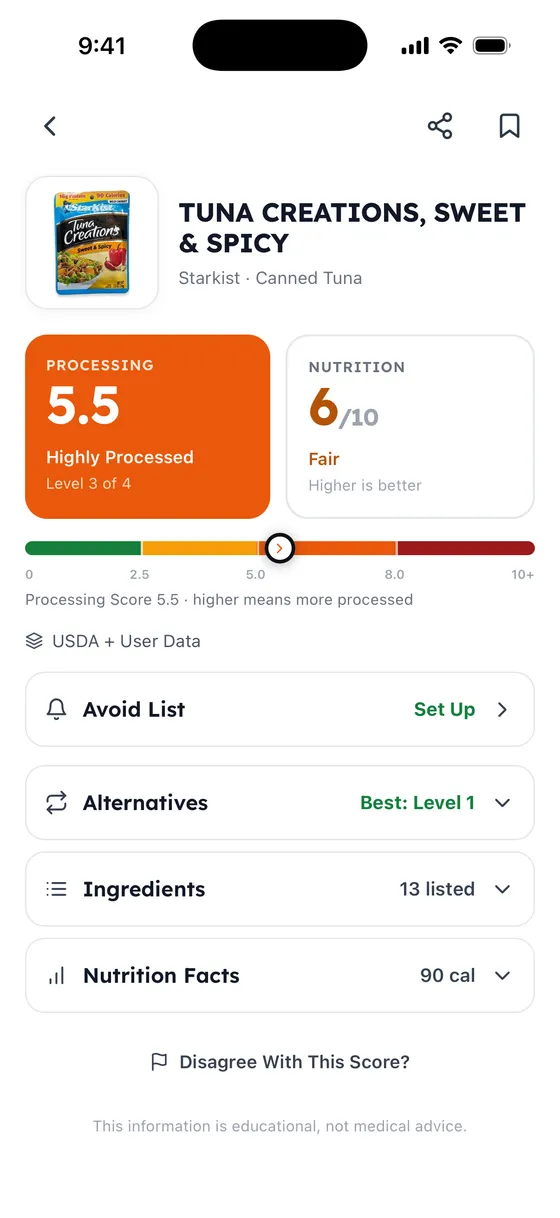
Frequently asked questions
Is Oatly ultra-processed?
Oatly lists oats, water, rapeseed oil, dipotassium phosphate, calcium carbonate, salt, vitamins, and gellan gum, and the oats are treated with enzymes. That is significantly more processed than plain cow's milk. Each Oatly product page shows its own score.
Why is oat milk sweet without added sugar?
Commercial oat milk uses amylase enzymes to break down oat starches into simple sugars (maltose and glucose) during production. This enzymatic hydrolysis creates sweetness without technically "adding sugar"; the sugar is created from the oats themselves.
Is homemade oat milk less processed?
Yes. Homemade oat milk (oats blended with water and strained) skips the enzymatic treatment, resulting in a less sweet, thicker product that is far less processed. The trade-off is a shorter shelf life and different texture.