
Quick answer
Both are Level 2 when sold as block cheese. The processing difference is negligible. Pre-shredded versions of either add anti-caking agents like cellulose powder, slightly increasing the processing level.
Processing levels can vary significantly between brands and specific products within each category. Always check the ingredient list of the specific product you are considering. Use our product search to look up exact processing scores. These comparisons evaluate processing level and ingredient composition only. They do not account for taste, price, convenience, cultural significance, or individual dietary needs.
How do they compare by the numbers?
Sample products from each


Ketzal for iPhone
Have One Of These At Home?
Scan it in Ketzal to see how your exact product scores, and what to swap it for.
Scan It Free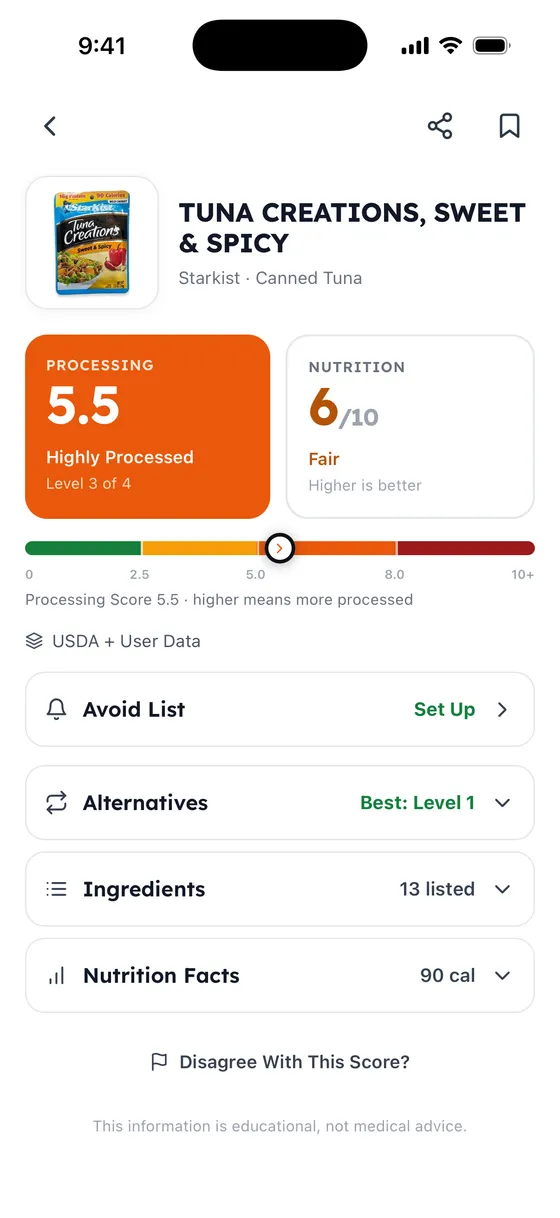
Frequently asked questions
Is Colby Jack less processed than cheddar?
No meaningful difference. Both are real cheese (milk, cultures, enzymes, salt). Colby Jack is aged less but this doesn't affect processing level. Both are Level 2.
Which cheeses are the least processed?
The least-processed cheeses are those with the shortest ingredient lists: block cheddar, mozzarella, Swiss, and Parmesan typically contain just milk, cultures, enzymes, and salt (Level 2). Processed cheese products like American singles or cheese spreads add emulsifiers, preservatives, and colorings, which is why they score Level 3-4.
Is cheese fattening?
Cheese is calorie-dense due to its fat content, but the processing level matters more than the fat content alone. Minimally processed block cheese (Level 2) provides protein, calcium, and beneficial fats. Ultra-processed cheese products with added starches, oils, and emulsifiers have altered nutritional profiles. In our analysis, the type of cheese matters more than cheese as a category.