
Key findings
- 1Tahini is a single-ingredient paste made by grinding toasted sesame seeds
- 2It has been produced the same way for roughly 4,000 years and is one of the oldest condiments
- 3Oil separation is natural and a sign of quality, not a processing problem
Why is Tahini Level 1 on average?
Tahini production involves two steps: toasting sesame seeds (typically at 150-170C for 5-15 minutes) and grinding them into a paste using stone mills or mechanical grinders. The natural oil content of sesame seeds (50-55% fat) creates the smooth, pourable consistency without any added oils, emulsifiers, or stabilizers. This is identical in principle to natural peanut butter production. Like peanut butter, tahini may separate with oil rising to the top; this is a sign of minimal processing, not a defect. Some brands add salt, the only other ingredient tahini needs. In our analysis, tahini products average a Processing Score of 1.2, which is Level 1. Tahini has been produced this way for at least 4,000 years in the Middle East.
How 21 tahini products break down
Share of products at each processing level, in our analysis.
Tahini brand comparison
From least to most processed in our database.
How to read a tahini label
- 1
Tahini should list one ingredient: sesame seeds (and optionally salt)
- 2
Oil separation on top is normal and indicates no emulsifiers were added; stir before using
- 3
"Hulled" tahini (lighter color) has had the seed coat removed; "unhulled" retains it, and both are still just ground sesame seeds
- 4
Flavored tahini spreads with added sugar or chocolate are more processed products; check the ingredient list
Ketzal for iPhone
Got Tahini At Home?
Scan yours in Ketzal to see how your exact product scores, not just the average, plus a less processed swap.
Scan It Free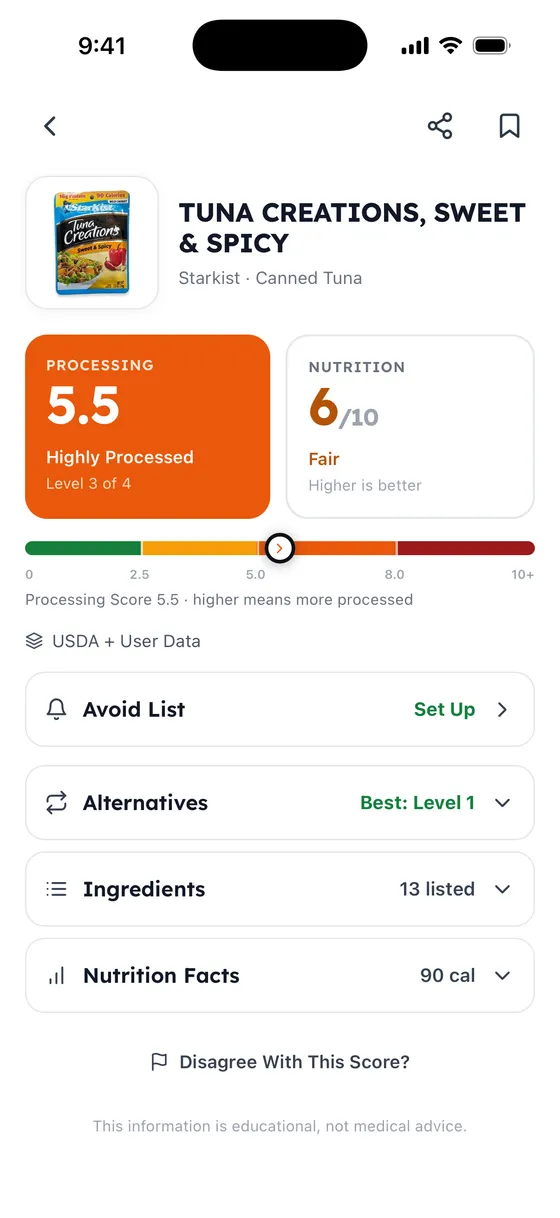
Frequently asked questions
Is tahini the same as sesame paste?
Tahini and East Asian sesame paste are similar but not identical. Both are ground sesame seeds. Tahini typically uses lightly toasted or raw seeds for a lighter flavor. Chinese/Korean sesame paste uses heavily roasted seeds for a darker, more intense flavor. The processing is the same.
Why does tahini separate?
Sesame seeds are 50-55% oil. Without added emulsifiers, this natural oil rises to the surface over time. This separation indicates minimal processing and no stabilizers were added. Stir it back together before each use.
Is tahini better than peanut butter?
From a processing standpoint, natural tahini (ground sesame seeds) and natural peanut butter (ground peanuts) are both single-ingredient pastes made the same way. The comparison is nutritional, not a processing distinction.