
Processing Score
8.5Ultra-Processed
02.55.08.010+
Nutrition Score
7/10Excellent
The processing score reflects 20 ingredients, including preservatives, emulsifiers or gums and natural flavoring. No nutrient exceeds our high thresholds.
Nutrition Highlights
Good Protein Source
Data Updated
Oct 18, 2026
UPC
072340001184
We may earn a commission from Amazon purchases.
Nutrition Facts
Serving size110 g
Amount per serving
Calories
70
% Daily Value*
Total Fat 0g
0%
Saturated Fat 0g
0%
Trans Fat 0g
Cholesterol 5mg
2%
Sodium 440mg
19%
Total Carbohydrate 5g
2%
Dietary Fiber 0g
0%
Total Sugars 5g
Protein 12g
Calcium 150mg
12%
Iron 0mg
0%
* The % Daily Value (DV) tells you how much a nutrient in a serving of food contributes to a daily diet. 2,000 calories a day is used for general nutrition advice.
Ingredients
20 listed · 8 flagged for reviewGRADE A SKIM MILK, LESS THAN 2%: SALT, WATER, CITRIC ACID, LACTIC ACID, PHOSPHORIC ACID, NATURAL FLAVORING, GUAR GUM, CARRAGEENAN, LOCUST BEAN GUM, ACETYLATED MONOGLYCERIDES, DEXTROSE, SODIUM ALUMINOSILICATE (ADDED TO PREVENT CAKING), TITANIUM DIOXIDE, POTASSIUM SORBATE, XANTHAN GUM, VITAMIN A, CALCIUM CHLORIDE, CULTURES, ENZYMES.
Listed in source order (heaviest first). Select any ingredient to see its category bucket and other products that contain it.
Why Does This Score Ultra-Processed?
In our analysis, Cottage Cheese scores Ultra-Processed. That classification is shaped by ingredients commonly associated with ultra-processed foods:
- Chemical Preservatives (Potassium Sorbate): Synthetic preservatives are UPF indicators.
- Natural Flavors (Natural Flavoring): Despite being natural, these are highly processed extracts.
- Stabilizers & Gums (Guar Gum, Carrageenan, Locust Bean Gum, +1 more): Industrial stabilizers common in UPF.
- Other Additives (Acetylated Monoglycerides): Miscellaneous additives generally indicate processing.
- Industrial Enzymes (Enzymes): Industrial enzyme use indicates significant processing.
Within Cheese, this product is more processed than about 94% of the 19,171 products we've analyzed.
Processing classification reflects ingredient and additive analysis, not a judgment of any product's safety, quality, or healthfulness.
What These Ingredients Tell Us
We group Cottage Cheese's ingredients into ingredient categories and note how each relates to food processing. The notes below describe the category, not this specific product's formulation.
- Salt & SodiumProcessing indicator
In this product: Less Than 2%: Salt.
Basic preservative, but high amounts indicate processing.
- Food AcidsProcessing indicator
In this product: Citric Acid, Lactic Acid, Phosphoric Acid.
Common in both traditional and industrial foods.
- Sugars & Natural SweetenersProcessing indicator
In this product: Dextrose.
Natural sugars acceptable in moderation, excessive amounts indicate UPF.
- Anti-Caking AgentsProcessing indicator
In this product: Sodium Aluminosilicate (Added To Prevent Caking).
Common in powdered processed foods.
- Natural ColorsProcessing indicator
In this product: Titanium Dioxide.
Natural sources but still indicate processing.
- Synthetic VitaminsProcessing indicator
In this product: Vitamin A.
Fortification often compensates for processing losses.
- MineralsProcessing indicator
In this product: Calcium Chloride.
Added minerals often compensate for processing.
This product is part of our wider analysis. It features in our Cottage Cheese vs Greek Yogurt comparison.
Ketzal for iPhone
Avoiding Milk?
This product lists milk in its ingredients. Ketzal, our iPhone app, tracks this and other allergens and ingredients on your Avoid List. Download Ketzal to set up your own Avoid List and get an alert when a product you scan contains something on it.
Get Ketzal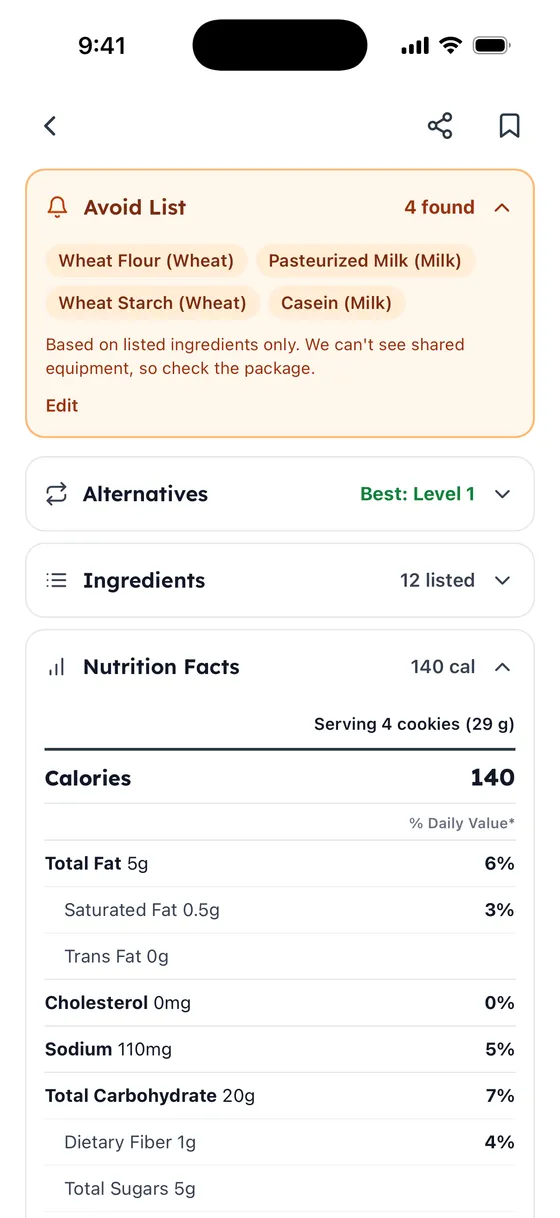
Less Processed Alternatives
Same category, with lower Processing Scores.
Alpenrose Dairy, Dry Curd Cottage Cheese
1.08.0
Less processed (Minimally Processed), higher nutrition score
Assorted Cheese Tray, Pepper Jack, Colby Jack, Swiss & Cheddar Cheeses
1.04.0
Less processed (Minimally Processed)
Baby Swiss Milk
1.04.5
Less processed (Minimally Processed)
Blue Cheese Crumbles, Blue
Good & Gather
1.03.0
Less processed (Minimally Processed)
Similar Products
Same category, at a similar Processing level.

More From Schroeder
Compare Schroeder To…
About our scores and this content
Processing and Nutrition Scores reflect the ingredient lists and nutrient data we observe; they are our analysis, not absolute measures of health. Read the full methodology. This information is provided for general nutrition education and is not medical, health, or dietary advice. Product formulations change often, so check the actual label before purchasing, and consult a registered dietitian or your physician for personal guidance.
Something wrong on this page? Let me know. If it's a product, you can also submit photos of its label using our mobile app, Ketzal.