
Quick answer
Is whole wheat bread good for health? That depends on the specific product, not the flour type. An artisan white sourdough (4 ingredients, Level 1) is less processed than a commercial whole wheat loaf (20 ingredients, Level 4). Always check the ingredient list rather than relying on the label.
Processing levels can vary significantly between brands and specific products within each category. Always check the ingredient list of the specific product you are considering. Use our product search to look up exact processing scores. These comparisons evaluate processing level and ingredient composition only. They do not account for taste, price, convenience, cultural significance, or individual dietary needs.
How do they compare by the numbers?
Sample products from each


Ketzal for iPhone
Have One Of These At Home?
Scan it in Ketzal to see how your exact product scores, and what to swap it for.
Scan It Free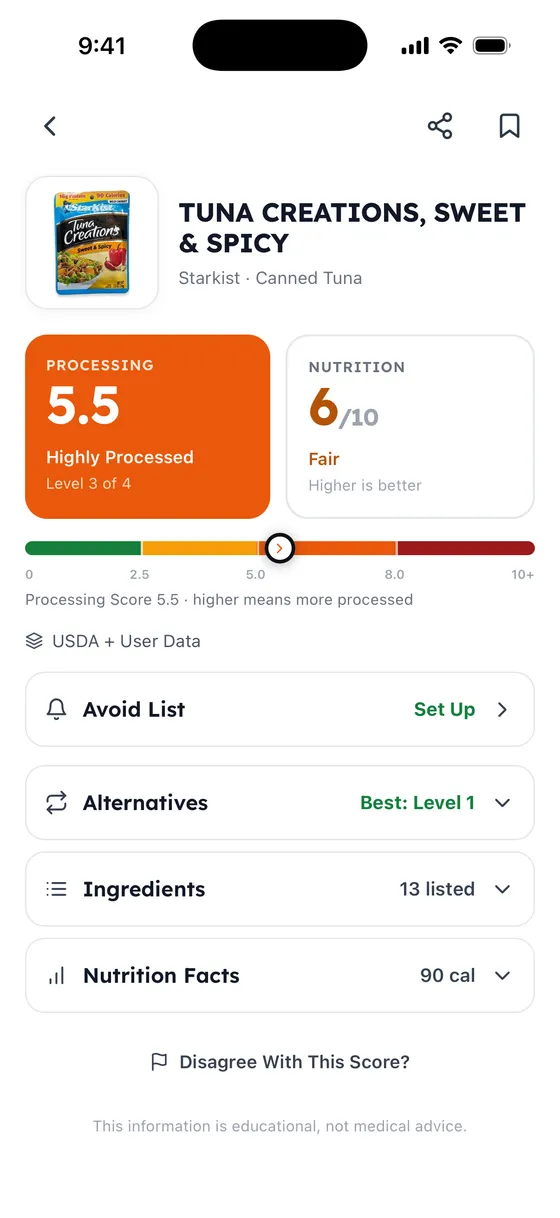
Frequently asked questions
Is whole wheat bread always less processed than white bread?
No. Commercial whole wheat bread often contains MORE additives than white bread: dough conditioners, vital wheat gluten, and extra preservatives to overcome the challenges of baking with whole grain flour. Check ingredient counts rather than just flour type.
What should I look for in bread?
Count the ingredients. Real bread needs 4-5 ingredients: flour (any type), water, salt, and yeast or starter. Any bread with this short list, whether white or whole wheat, is Level 1-2.
How does sourdough vs whole wheat compare for processing?
True sourdough bread (flour, water, salt, starter) is one of the least processed breads available, typically Level 1. Most commercial whole wheat bread uses yeast plus numerous dough conditioners and preservatives, landing at Level 3-4. However, some "sourdough" breads sold in supermarkets use sourdough flavoring rather than actual fermentation, so check the ingredient list.