
Key findings
- 1The aromatic compound 2-acetyl-1-pyrroline is naturally produced by the rice plant, not added during processing
- 2Fresh jasmine rice is most fragrant; the aroma degrades with storage, the opposite of processed food enhancement
- 3Thai Hom Mali certification indicates authentic jasmine rice from Thailand
Why is Jasmine Rice Level 1 on average?
Jasmine rice (Oryza sativa, Thai Hom Mali variety) gets its distinctive floral, buttery aroma from the same naturally occurring volatile compound found in basmati and pandan leaves: 2-acetyl-1-pyrroline (2-AP). This compound is produced in the rice plant during growth and is concentrated in the grain. It is not sprayed, injected, or added during processing. In fact, processing reduces the aroma; freshly harvested jasmine rice is most fragrant, and the compound degrades over storage time. This is the opposite of what happens with most processed foods. The milling process for jasmine rice is identical to any other white rice: the inedible husk is removed, and the grain is polished to remove the bran layer. In our analysis, jasmine rice averages a Processing Score of 1.3, which is Level 1.
How 310 jasmine rice products break down
Share of products at each processing level, in our analysis.
Jasmine Rice brand comparison
From least to most processed in our database.
How to read a jasmine rice label
- 1
Jasmine rice should list one ingredient: jasmine rice (or Thai jasmine rice)
- 2
The aroma is natural; if a package seems unscented, the rice may be old or not authentic
- 3
Brown jasmine rice retains the bran: the same minimal processing, more fiber, slightly less aromatic
- 4
Watch for jasmine rice with added seasonings or "jasmine-scented" rice that may be fraudulent
Ketzal for iPhone
Got Jasmine Rice At Home?
Scan yours in Ketzal to see how your exact product scores, not just the average, plus a less processed swap.
Scan It Free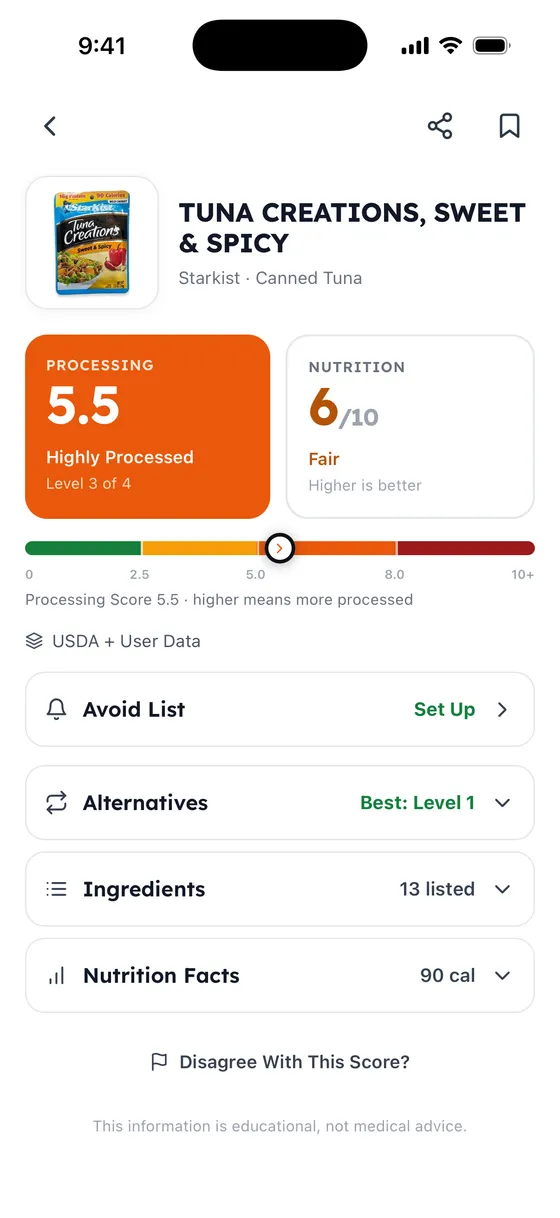
Frequently asked questions
Why does jasmine rice smell so good?
The floral aroma comes from 2-acetyl-1-pyrroline (2-AP), a volatile compound naturally produced in the rice grain during growth. It is the same compound found in pandan leaves and popcorn. Nothing is added during processing; the scent is genetic.
Is jasmine rice more processed than regular white rice?
No. Jasmine rice undergoes identical processing to any white rice: husking and polishing. The aroma is natural, not from any additional processing step. Both are single-ingredient foods.
Does jasmine rice lose its smell over time?
Yes. The aromatic compound 2-AP is volatile and degrades during storage. Freshly harvested jasmine rice is most fragrant. This is actually evidence that the aroma is natural; a manufactured fragrance would be more stable.