
Key findings
- 1Aged basmati is stored for 1-2 years to reduce moisture, a natural process that improves grain separation when cooked
- 2The distinctive aroma is from naturally occurring 2-acetyl-1-pyrroline, not any added fragrance
- 3Basmati adulteration with cheaper rice varieties is an industry-wide concern; buy from reputable sources
Why is Basmati Rice Level 1 on average?
Basmati rice is processed identically to any other rice: harvesting, drying, hulling, and optional polishing. What makes basmati unique is its unusually long grain (6.61-7.5mm) and its aromatic compound 2-acetyl-1-pyrroline (2-AP), which is genetically determined and naturally occurring. Aged basmati is a fascinating tradition: the rice is stored for 12-24 months after milling, during which time moisture content drops from ~13% to ~9%. This aging causes the grains to cook up fluffier, longer, and more separate; prized in biryani and pilaf. No chemicals are added during aging; it is simply time and controlled storage. Fraudulent "basmati" adulterated with cheaper long-grain rice is a known industry problem. In our analysis, basmati rice averages a Processing Score of 1.5, which is Level 1.
How 302 basmati rice products break down
Share of products at each processing level, in our analysis.
Basmati Rice brand comparison
From least to most processed in our database.
How to read a basmati rice label
- 1
Basmati rice should list one ingredient: basmati rice
- 2
"Aged basmati" is stored longer for better cooking quality, not more processed
- 3
Brown basmati retains the bran layer: the same minimal processing, with more fiber
- 4
Watch for basmati rice mixes with seasoning packets; those are far more processed
Ketzal for iPhone
Got Basmati Rice At Home?
Scan yours in Ketzal to see how your exact product scores, not just the average, plus a less processed swap.
Scan It Free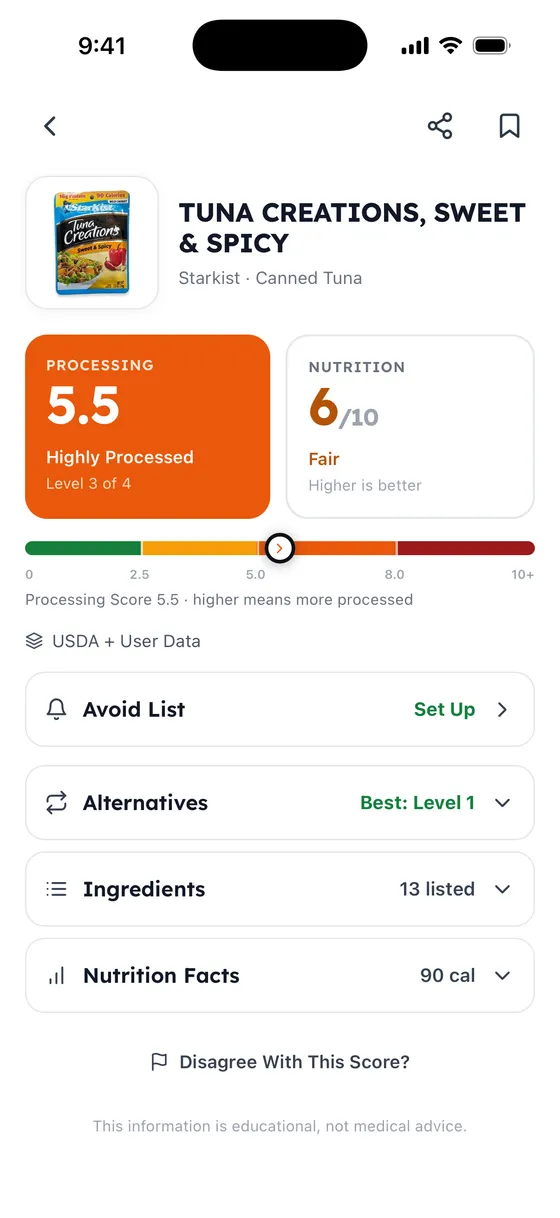
Frequently asked questions
Is aged basmati rice more processed?
No. Aging simply means storing the milled rice for 1-2 years in controlled conditions. The lower moisture content makes grains cook up longer and fluffier. No chemicals or treatments are involved; it is the rice equivalent of aging cheese or wine.
Why does basmati rice smell fragrant?
The aroma comes from 2-acetyl-1-pyrroline (2-AP), a naturally occurring compound in the rice grain determined by genetics and growing conditions. It is not added or sprayed on. The compound is the same one that gives pandan leaves and freshly baked bread their aroma.
Is brown basmati rice less processed than white basmati?
Brown basmati skips the polishing step that removes the bran layer, making it fractionally less processed. But both are single-ingredient foods, and the difference is one mechanical step, not chemical processing.