
Key findings
- 1Ghee is a traditional clarified butter made through simple slow heating
- 2In our analysis, ghee products average a Processing Score of 1.6, which is Level 1
- 3The process removes water and milk solids, leaving pure butterfat with a higher smoke point
- 4Ghee and clarified butter are virtually identical in processing; ghee is typically cooked slightly longer for a nuttier flavor
Why is Ghee Level 1 on average?
Ghee production is a thermal separation process used for thousands of years in South Asian cooking. Butter is heated to approximately 120C (250F), which evaporates water (butter is about 15-17% water) and causes milk proteins (casein, whey) to settle and brown. The browned solids are strained out, leaving pure butterfat with a nutty flavor. This process is identical whether done in a home kitchen or a commercial facility. The removal of milk solids gives ghee its high smoke point (250C vs. 175C for butter) and extended shelf stability without refrigeration (which is a natural preservation effect, not an additive-driven one. In our analysis, ghee products average a Processing Score of 1.6, which is Level 1.
How 100 ghee products break down
Share of products at each processing level, in our analysis.
Ghee brand comparison
From least to most processed in our database.
How to read a ghee label
- 1
Ghee should list one ingredient: butter (or cream/milk)
- 2
Some brands add salt, which keeps the list short; check if you want unsalted
- 3
Grass-fed ghee has no processing difference from conventional, and the distinction is in the source milk
- 4
Watch for ghee products listing oils, emulsifiers, or flavoring agents
Ketzal for iPhone
Got Ghee At Home?
Scan yours in Ketzal to see how your exact product scores, not just the average, plus a less processed swap.
Scan It Free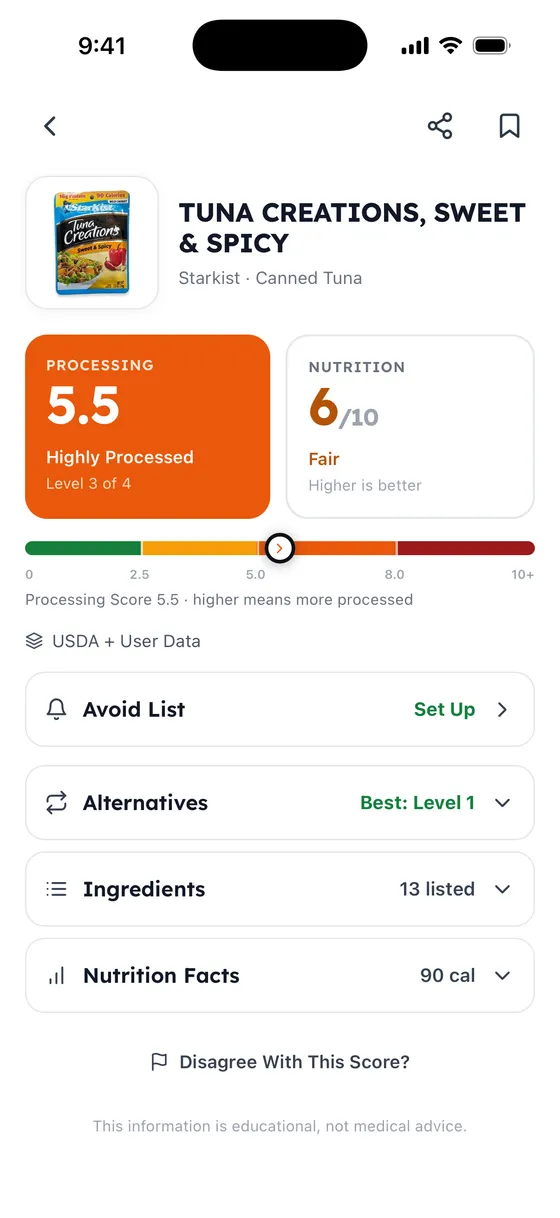
Frequently asked questions
Is ghee healthier than butter?
From a processing standpoint, ghee adds one heating and straining step to butter, and nothing else. Nutritional differences relate to the removal of milk solids, not processing level.
Is ghee dairy-free?
No. Ghee is made from butter, so it is a milk product. Check the package and ask your doctor if you have a milk allergy.
Does ghee need to be refrigerated?
Ghee is shelf-stable at room temperature because the removal of water and milk solids eliminates the components that cause butter to spoil. This extended shelf life is a natural result of the clarification process, not preservatives.