
Key findings
- 1Frozen yogurt averages 20-24g sugar per serving vs 14-17g in premium ice cream, and the sugar content differs from common perception
- 2The low-fat formulation requires additional stabilizers (gums, emulsifiers) that ice cream does not need
- 3Probiotic claims are questionable; many live cultures do not survive the freezing process
Why is Frozen Yogurt ultra-processed on average?
Frozen yogurt faces a formulation challenge: removing fat (compared to ice cream) removes flavor and creaminess, so manufacturers compensate with sugar and stabilizers. A typical serving of frozen yogurt contains 20-24g of sugar compared to 14-17g in premium ice cream. The yogurt cultures that define the product are often added after pasteurization, meaning the "probiotic" benefit is variable, and some survive, many do not. Stabilizers like guar gum, cellulose gum, and carrageenan prevent ice crystal formation that the missing fat would otherwise control. Self-serve frozen yogurt shops use liquid mixes that are essentially industrial dairy formulations with long ingredient lists. In our analysis, frozen yogurt averages a Processing Score of 9.5, which is Level 4.
How 436 frozen yogurt products break down
Share of products at each processing level, in our analysis.
Frozen Yogurt brand comparison
From least to most processed in our database.
How to read a frozen yogurt label
- 1
Compare sugar content to ice cream, frozen yogurt often has more, not less, sugar per serving
- 2
Guar gum, cellulose gum, and carrageenan replace the stabilizing role that fat plays in ice cream
- 3
Check if live cultures are listed and not all frozen yogurt actually contains active probiotics
- 4
Self-serve shop mixes are typically more processed than grocery store brands
Ketzal for iPhone
Got Frozen Yogurt At Home?
Scan yours in Ketzal to see how your exact product scores, not just the average, plus a less processed swap.
Scan It Free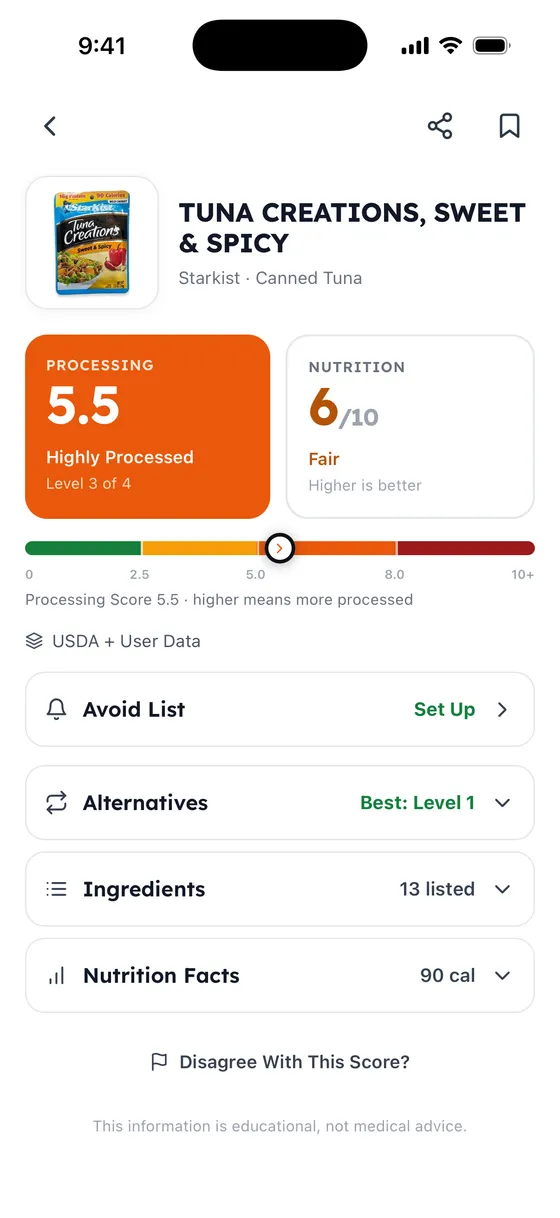
Frequently asked questions
Is frozen yogurt healthier than ice cream?
Not necessarily. Frozen yogurt has less fat but typically more sugar and more stabilizer additives. From a processing standpoint, premium ice cream with a short ingredient list is often less processed than frozen yogurt. In our analysis, frozen yogurt averages Level 4.
Does frozen yogurt have probiotics?
Some frozen yogurt contains live active cultures, but the freezing process kills many of them. The probiotic content is significantly lower than regular refrigerated yogurt. Check labels for "live and active cultures" but understand the actual count is reduced.
Guide · Frozen & Treats
The Complete Frozen & Treats Guide
Processing analysis, least-processed picks, and what to watch for.
Read guide