
Key findings
- 1Canning is heat sterilization in a sealed container, a 200-year-old preservation method that requires no chemical additives
- 2Plain canned tuna (tuna, water, salt) is one of the simplest shelf-stable proteins available
- 3In our analysis, canned tuna averages a Processing Score of 3.1, which is Level 2
- 4Flavored and seasoned tuna pouches add broth, modified starch, sugar, and seasonings that make them more processed
Why is Canned Tuna Level 2 on average?
Canned tuna production involves cooking tuna loins, packing them into cans with water or oil and salt, sealing, and retort sterilization (heating the sealed can to 115-120C to kill all bacteria and spores). This is Nicolas Appert's 1810 invention; preservation through heat in a sealed container, and it has not fundamentally changed in over 200 years. The product is shelf-stable for 3-5 years with no preservatives needed because the sterilization and hermetic seal prevent microbial growth. Albacore ("white tuna") and skipjack ("chunk light") differ in species and mercury content but are processed identically. The processing escalation comes with flavored varieties; lemon pepper, Thai chili, herb-seasoned; that add vegetable broth, modified food starch, sugar, and various seasonings.
How 1,152 canned tuna products break down
Share of products at each processing level, in our analysis.
Canned Tuna brand comparison
From least to most processed in our database.
How to read a canned tuna label
- 1
The simplest canned tuna lists three ingredients: tuna, water (or oil), salt
- 2
"Chunk light" (skipjack) and "solid white" (albacore) differ in species, not processing
- 3
Flavored varieties with broth, sugar, and seasonings are more processed
- 4
Tuna packed in olive oil is not more processed; just a different packing medium
Ketzal for iPhone
Got Canned Tuna At Home?
Scan yours in Ketzal to see how your exact product scores, not just the average, plus a less processed swap.
Scan It Free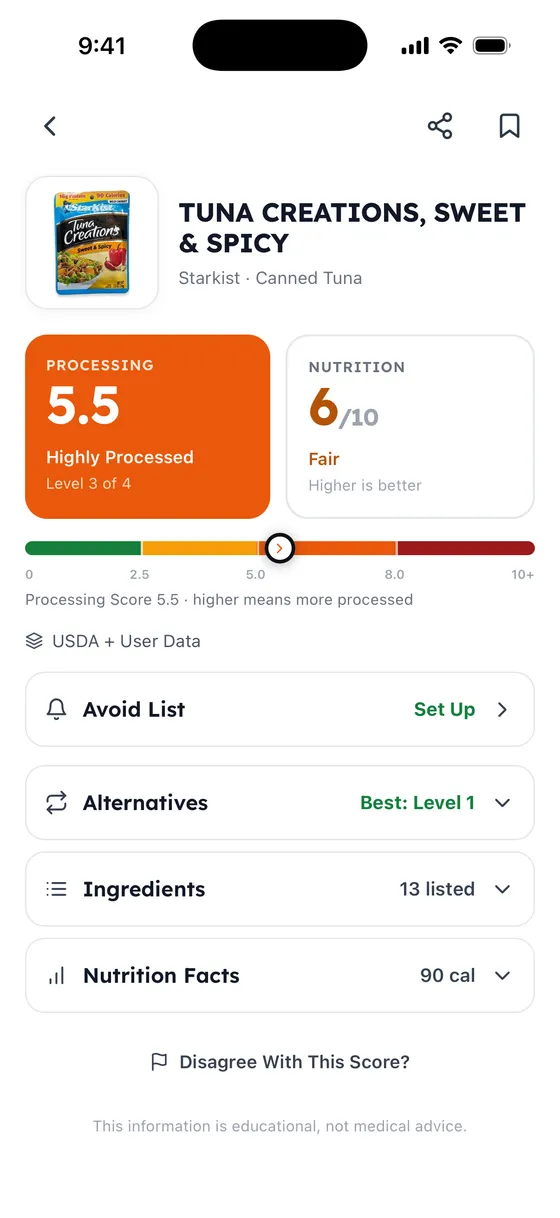
Frequently asked questions
Is canned tuna a processed food?
Yes, but lightly. Plain canned tuna is cooked, sealed in a can with water or oil and salt, and heat-sterilized, and in our analysis canned tuna averages Level 2 (Processed). Flavored cans and pouches add broth, starch, sugar, and seasonings, which makes them more processed.
Is canned tuna healthier than fresh tuna?
From a processing standpoint, fresh and canned tuna differ only by the canning step. Nutritionally they are similar, though canned tuna may be slightly lower in omega-3s due to the heat processing. The mercury content is the same regardless of canning.
Is tuna in oil more processed than tuna in water?
No. Both versions undergo identical canning. The oil vs water choice is the packing medium, not a processing difference. Oil-packed tuna has more calories but is not more processed. Some argue oil-packed retains more omega-3 fatty acids.
Are tuna pouches more processed than cans?
Plain tuna pouches are similarly processed to cans. They are retort-sterilized in a flexible pouch instead of a metal can. However, flavored pouch varieties are more commonly available and tend to contain more ingredients than plain canned tuna.