
Key findings
- 1The electrolytes in Gatorade are simple salts; the colors, flavors, and added sugars are what make it more processed
- 2Gatorade Zero is not less processed, and it replaces one industrial ingredient (high sugar) with two others (sucralose, acesulfame-K)
- 3Homemade electrolyte drinks (water, salt, potassium salt, citrus juice) provide electrolytes from a few kitchen ingredients without artificial additives
What goes into Gatorade products?
Gatorade was developed at the University of Florida in 1965 as a rehydration formula for athletes. The original recipe was water, sodium, potassium, phosphate, sugar, and lemon juice. Today's Gatorade lists two sugar sources (sucrose and dextrose) providing 34g of sugar per 20oz bottle, citric acid (acidity regulator), "natural flavor" (a processed flavor compound), and FD&C artificial colors that serve no functional purpose beyond visual appeal. The electrolytes themselves, sodium chloride, sodium citrate, and monopotassium phosphate, are simple salts. The colors, flavoring, and two added sugars on top of them are what move it up the processing scale. Gatorade Zero replaces sugar with sucralose and acesulfame potassium, two artificial sweeteners, which is a lateral move on the processing scale, not an improvement. Homemade electrolyte water (water, salt, potassium salt, lemon juice, honey) provides electrolytes from a few kitchen ingredients.
How 337 gatorade products break down
Share of products at each processing level, in our analysis.
Gatorade brand comparison
From least to most processed in our database.
How to read a gatorade label
- 1
Artificial colors (Red 40, Blue 1, Yellow 5) serve zero functional purpose in a sports drink, and they are purely cosmetic
- 2
Gatorade Zero replaces sugar with sucralose and acesulfame-K, so it swaps one sweetener for artificial ones rather than becoming less processed
- 3
"Natural flavor" in Gatorade is an industrially produced flavor compound, not fruit juice or real flavoring
- 4
Check sugar content: 34g per 20oz bottle is equivalent to eating 8.5 sugar cubes
Ketzal for iPhone
Got Gatorade At Home?
Scan yours in Ketzal to see how your exact product scores, not just the average, plus a less processed swap.
Scan It Free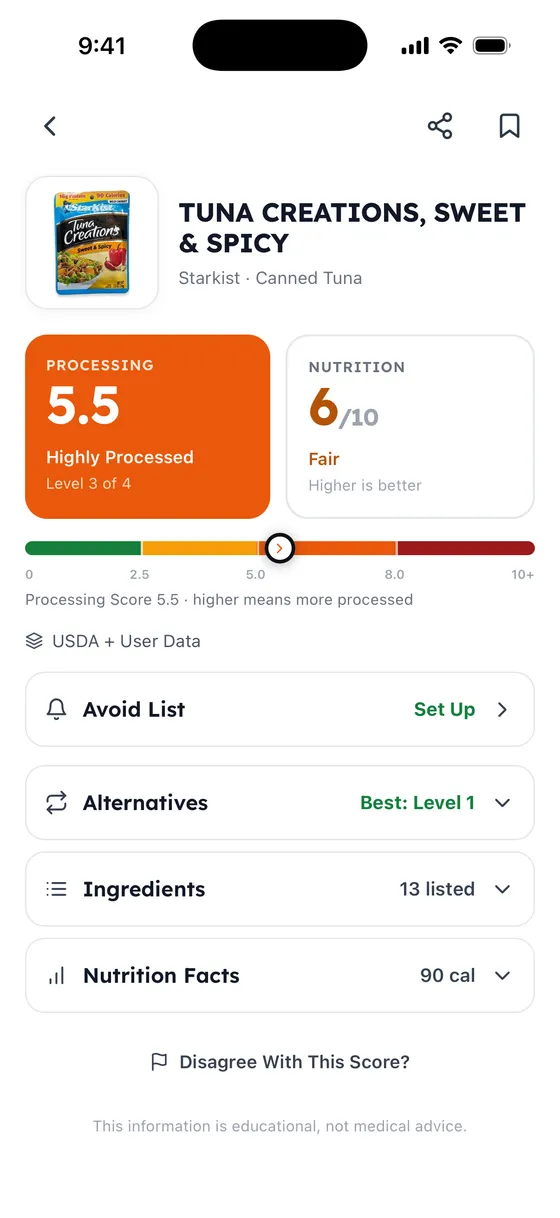
Frequently asked questions
Is Gatorade Zero healthier than regular Gatorade?
Gatorade Zero removes the sugar but replaces it with sucralose and acesulfame potassium, both artificial sweeteners. From a processing standpoint, it trades one type of industrial ingredient for another rather than becoming less processed.
Is Gatorade bad for you?
That is a question for a clinician or dietitian rather than for a processing score. What the bottle contains: water, two sugars, salts for electrolytes, citric acid, natural flavor, and in most flavors artificial colors. For everyday hydration, plain water has one ingredient.
What is a less processed alternative to Gatorade?
Homemade electrolyte water (water, pinch of salt, splash of orange juice) provides electrolytes with less processing, and some drink mixes skip artificial colors and sweeteners; check the label. Unflavored coconut water is a single-ingredient electrolyte source.
Why does Gatorade have artificial colors?
The artificial colors (Red 40, Blue 1, Yellow 5) serve no nutritional or functional purpose; they only change how the drink looks. The same electrolyte and flavor function could be achieved without them.