
Most Processed Instant Noodles
Each product is ranked by its own Processing Score, highest first. To keep the list from being one company's catalog, it shows at most two products from any one brand.
Instant Noodles by the Numbers
We scored every instant noodles product in our database: 950 items across 202 brands. In our analysis, about 87% land in the Highly or Ultra-Processed tiers.
What should you look for on the label?
- Air-dried noodles are less processed than deep-fried varieties
- The seasoning packet is where most additives hide: some contain 20+ ingredients
- TBHQ (preservative) is added to the frying oil in many instant noodle brands
- Sodium per serving typically exceeds 1000mg, often 40-60% of daily recommended intake
- Check ramen noodle ingredients separately from the seasoning packet for a clearer picture
Least Processed Instant Noodles
For context, here are the top 5 of the opposite ranking, the least processed instant noodles in our analysis.
Ketzal for iPhone
Find The Swap For What You Already Buy.
Scan a product you use and Ketzal suggests less processed options from the same category.
Find My Swap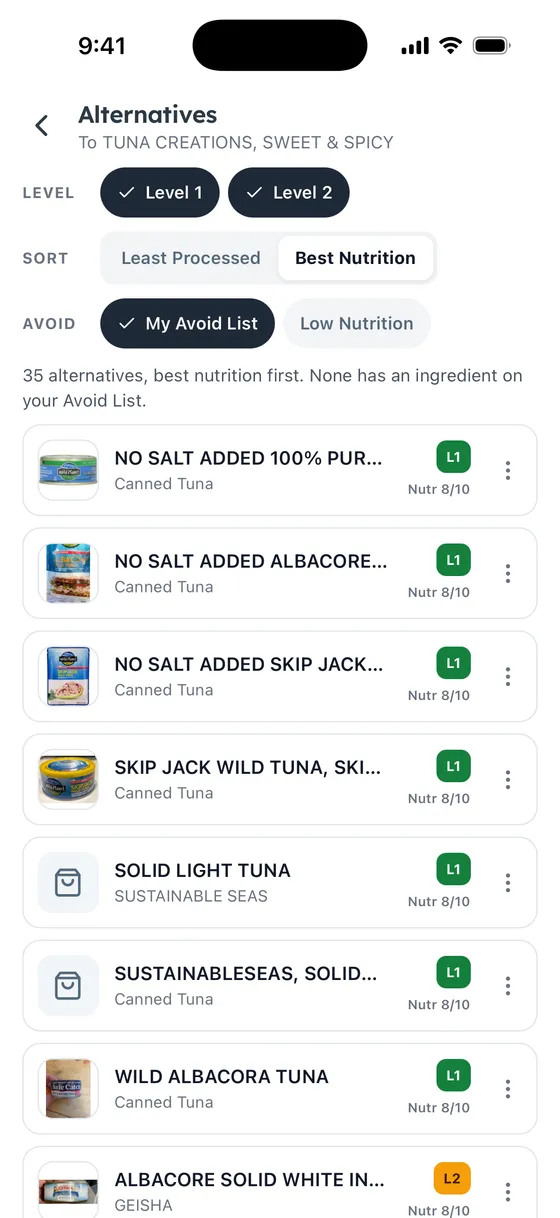
How are products scored?
Every product is evaluated using two independent scores. The Processing Score (lower is better) measures the degree of industrial processing based on ingredient analysis, including the presence of artificial additives, preservatives, and highly modified ingredients. The Nutrition Score (higher is better) rates overall nutritional quality, rewarding protein and fiber while penalizing excess sodium, added sugars, and saturated fat.
Products are assigned to one of four processing levels: Minimal (score ≤ 2.5), Processed (2.6 to 5.0), Highly Processed (5.1 to 8.0), and Ultra-Processed (above 8.0). Each product in the ranking is placed by its own Processing Score, not by its brand. Based on our analysis of 445K+ curated products from the USDA FoodData Central database. For a deeper look, see our Processing Score guide and Two-Score System explanation.
Frequently Asked Questions
Why are instant noodles so cheap?
The combination of cheap wheat flour, palm oil (for frying), and industrial flavor packets using MSG and dehydrated ingredients makes production extremely cost-effective.
Is ramen more processed than other noodles?
Instant ramen is significantly more processed than fresh ramen (flour, water, kansui) or dried pasta (semolina, water). The deep-frying and industrial seasoning packet make the difference.
Are cup noodles worse than packet noodles?
Cup noodles typically contain more additives including dehydrated vegetables and meat with additional preservatives, plus the styrofoam cup raises separate health concerns.