
Key findings
- 1Couscous is tiny pasta, not a whole grain; it is made from the same durum wheat semolina as spaghetti and processes identically
- 2Plain couscous lists one or two ingredients; flavored mixes with seasoning packets are far more processed due to additives like maltodextrin and autolyzed yeast extract
- 3The seasoning packet in a flavored couscous box can contain more ingredients than many ultra-processed frozen dinners
Why is Couscous Level 2 on average?
Couscous is often mistaken for a whole grain, but it is actually a form of pasta. Semolina (coarsely ground durum wheat) is moistened with water and rolled into tiny granules, then steamed and dried. This is the same base process as making any dried pasta; mixing, shaping, and drying, just at a much smaller scale. The product stores indefinitely with no preservatives because, like dried pasta, it has virtually no moisture for microbial growth. The processing concern arises with flavored couscous mixes, which package couscous with seasoning packets that can contain autolyzed yeast extract (a glutamate source similar to MSG), maltodextrin, vegetable oils, "natural flavors," silicon dioxide (anti-caking agent), and dehydrated vegetable powders. These packets turn a two-ingredient food into a product with a long ingredient list. Israeli (pearl) couscous is toasted after shaping, adding one processing step but no additives. In our analysis, couscous products average a Processing Score of 2.6, which is Level 2.
How 205 couscous products break down
Share of products at each processing level, in our analysis.
Couscous brand comparison
From least to most processed in our database.
How to read a couscous label
- 1
Plain couscous should list only one or two ingredients: semolina (or durum wheat semolina) and possibly salt
- 2
Flavored couscous mixes: the seasoning packet alone can carry a long list, including yeast extract, maltodextrin, and added oils
- 3
Israeli (pearl) couscous is toasted, slightly more processed but still typically just semolina and water
- 4
Whole wheat couscous uses whole durum wheat semolina; the same processing, with more fiber
Ketzal for iPhone
Got Couscous At Home?
Scan yours in Ketzal to see how your exact product scores, not just the average, plus a less processed swap.
Scan It Free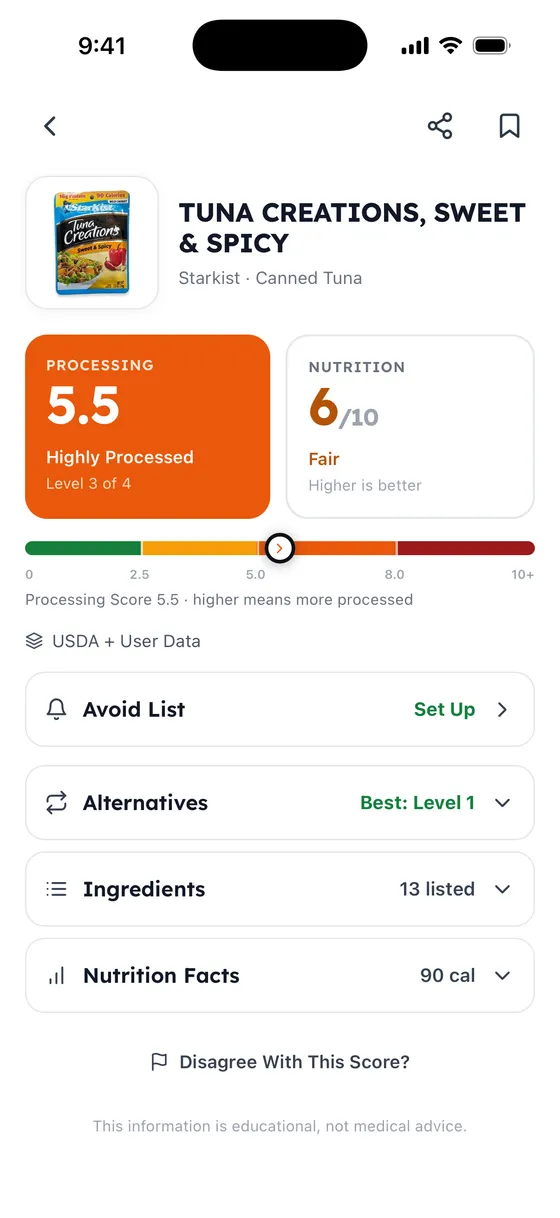
Frequently asked questions
Is couscous a whole grain?
No. Regular couscous is made from refined semolina; it is technically tiny pasta, not a grain. Whole wheat couscous uses whole grain semolina and provides more fiber but is still a pasta product. For a true whole grain alternative, try bulgur or quinoa.
Is couscous healthier than rice?
From a processing standpoint, plain couscous and plain rice are both simple foods. Couscous is slightly more processed because semolina is milled, then shaped, steamed, and dried. Nutritionally, they are comparable in calories with different micronutrient profiles.
Is Near East couscous ultra-processed?
Plain couscous (just semolina) is a simple, pasta-like food. Flavored couscous mixes are far more processed; their seasoning packets typically list yeast extract, maltodextrin, oils, and "natural flavors." Check the specific box, or buy plain couscous and season it yourself for a dramatically simpler product.
Is Israeli couscous more processed than regular?
Slightly. Israeli (pearl) couscous is toasted after shaping, which adds one processing step. However, it still typically contains just semolina and water. The toasting is a cooking step, not a chemical treatment, so it adds very little processing.