
Key findings
- 1Instant noodle blocks are deep-fried, not just dried; they contain 15-20% fat from frying oil
- 2A single packet of ramen seasonings can contain 1,500-2,000mg of sodium
- 3Dried rice noodles or plain pasta are far less processed alternatives
- 4In our analysis, instant noodles average a Processing Score of 9.4, which is Level 4
Why is Instant Noodles ultra-processed on average?
Instant noodle production involves making wheat noodles, then deep-frying them in palm oil at 140-160C for 1-2 minutes to dehydrate them (creating the characteristic wavy shape). The frying reduces moisture from 30% to 3% for shelf stability. TBHQ (tertiary butylhydroquinone) is added to the frying oil as a preservative. Flavor packets combine MSG, salt (often 1,500-2,000mg sodium per packet), dehydrated vegetables, and artificial flavors.
How 388 instant noodles products break down
Share of products at each processing level, in our analysis.
Instant Noodles brand comparison
From least to most processed in our database.
How to read a instant noodles label
- 1
The noodles themselves are fried, "air dried" varieties exist but are less common
- 2
TBHQ in the noodle frying oil may not appear prominently on labels
- 3
A single serving often contains 60-80% of daily sodium recommendation
- 4
MSG appears as "monosodium glutamate" or "hydrolyzed vegetable protein"
Ketzal for iPhone
Got Instant Noodles At Home?
Scan yours in Ketzal to see how your exact product scores, not just the average, plus a less processed swap.
Scan It Free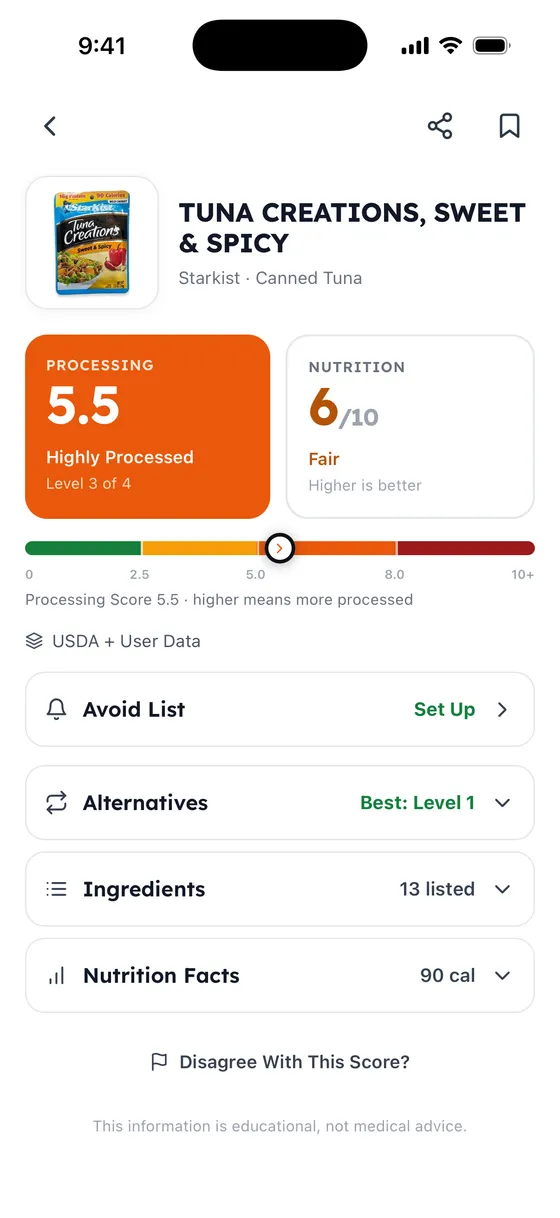
Frequently asked questions
Are all instant noodles deep-fried?
Most are. Some brands offer "air dried" or "non-fried" varieties that are dehydrated without frying. These are slightly less processed but the flavor packets still contain the same industrial seasonings.
Is ramen from a restaurant ultra-processed?
Restaurant ramen uses fresh noodles, bone/vegetable broth, and fresh toppings; far less processed than instant ramen. The comparison is entirely different foods sharing a name.