
Target Store-Brand Products, Least to Most Processed
Each product is ranked by its own Processing Score, lowest first.
What should you look for on the label?
- Good & Gather branding emphasizes clean labels, so verify with actual ingredient lists
- Target's organic Good & Gather line tends to have simpler formulations
- Compare Good & Gather to both Walmart Great Value and premium national brands
- Favorite Day is Target's treats brand, so expect longer ingredient lists there
Ketzal for iPhone
Find The Swap For What You Already Buy.
Scan a product you use and Ketzal suggests less processed options from the same category.
Find My Swap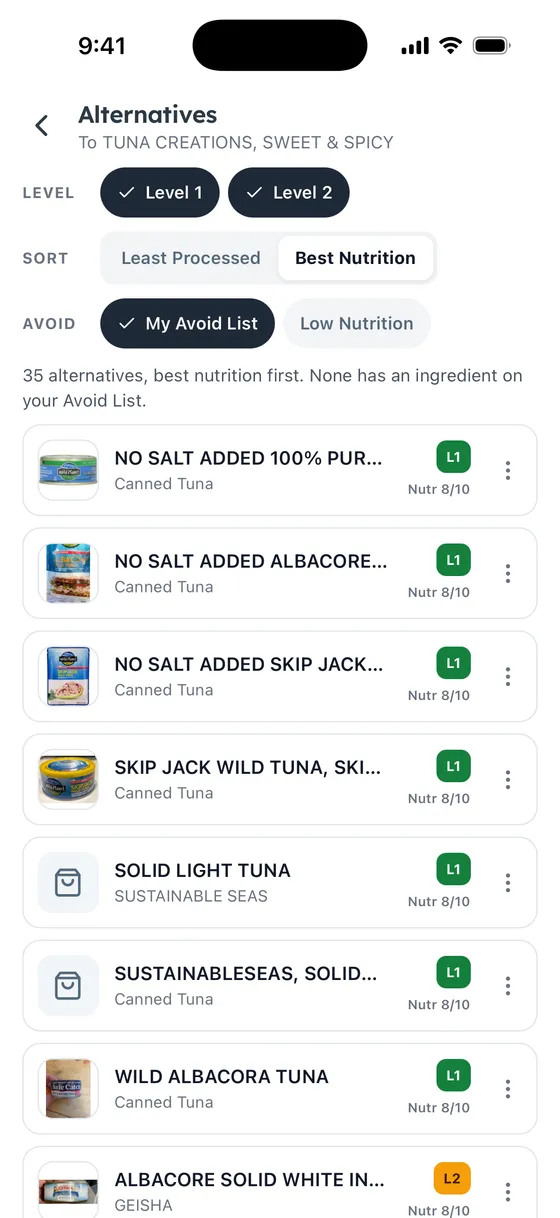
How are products scored?
Every product is evaluated using two independent scores. The Processing Score (lower is better) measures the degree of industrial processing based on ingredient analysis, including the presence of artificial additives, preservatives, and highly modified ingredients. The Nutrition Score (higher is better) rates overall nutritional quality, rewarding protein and fiber while penalizing excess sodium, added sugars, and saturated fat.
Products are assigned to one of four processing levels: Minimal (score ≤ 2.5), Processed (2.6 to 5.0), Highly Processed (5.1 to 8.0), and Ultra-Processed (above 8.0). Each product in the ranking is placed by its own Processing Score, not by its brand. Based on our analysis of 445K+ curated products from the USDA FoodData Central database. For a deeper look, see our Processing Score guide and Two-Score System explanation.
Frequently Asked Questions
Is Good & Gather less processed than Great Value?
It depends on the product. Good & Gather and Great Value both carry simple staples and long ingredient lists, so compare the two products you are choosing between. Each product page shows its own score.
Which Target products are most processed?
Treats, frozen meals, and bakery items tend to score highest, whichever Target label they carry. Fresh and refrigerated items tend to score lowest.
How does Target compare to Whole Foods?
Both stores sell simple staples and long-ingredient products under their own labels. Compare the products, not the stores: each product page shows its own score.