
Key findings
- 1Plain coffee (brewed, drip, pour-over, French press, espresso) is a single-ingredient beverage
- 2Instant coffee (freeze-dried or spray-dried) adds an industrial drying step but remains a single-ingredient product
- 3Bottled and canned coffee drinks often carry long ingredient lists, including stabilizers, emulsifiers, and sweeteners
- 4Coffee creamers are among the most processed common grocery items, built from vegetable oils and industrial stabilizers
Why is Coffee Level 2 on average?
Roasting is a traditional thermal process that has been applied to coffee beans for centuries: green beans are heated to 180-230C, triggering Maillard reactions that develop flavor compounds. Brewing extracts soluble compounds with hot water. Neither step introduces additives or industrial processing aids. Instant coffee adds an industrial step, freeze-drying or spray-drying brewed coffee into soluble granules, but the product remains single-ingredient. The processing concern escalates with flavored coffees, which introduce "natural flavors," sweeteners, and sometimes artificial colors. Coffee creamers are far more processed, typically containing vegetable oils, corn syrup solids, dipotassium phosphate, and sodium caseinate, engineered to mimic cream without containing any. Bottled and canned coffee drinks often list sugar, milk protein concentrate, cellulose gel, carrageenan, and sucralose. In our analysis, coffee products average a Processing Score of 4.0, which is Level 2.
How 571 coffee products break down
Share of products at each processing level, in our analysis.
Coffee brand comparison
From least to most processed in our database.
How to read a coffee label
- 1
Check creamers separately; most contain no actual cream and are far more processed than the coffee itself
- 2
"Natural flavors" in flavored coffees indicate industrial flavor formulations added after roasting
- 3
Compare cold brew concentrate (coffee and water) to bottled coffee drinks with long lists of sweeteners and stabilizers
- 4
Instant coffee listing only "coffee" as the ingredient is still a single-ingredient product; flavored instant mixes with creamer powder are far more processed
Ketzal for iPhone
Got Coffee At Home?
Scan yours in Ketzal to see how your exact product scores, not just the average, plus a less processed swap.
Scan It Free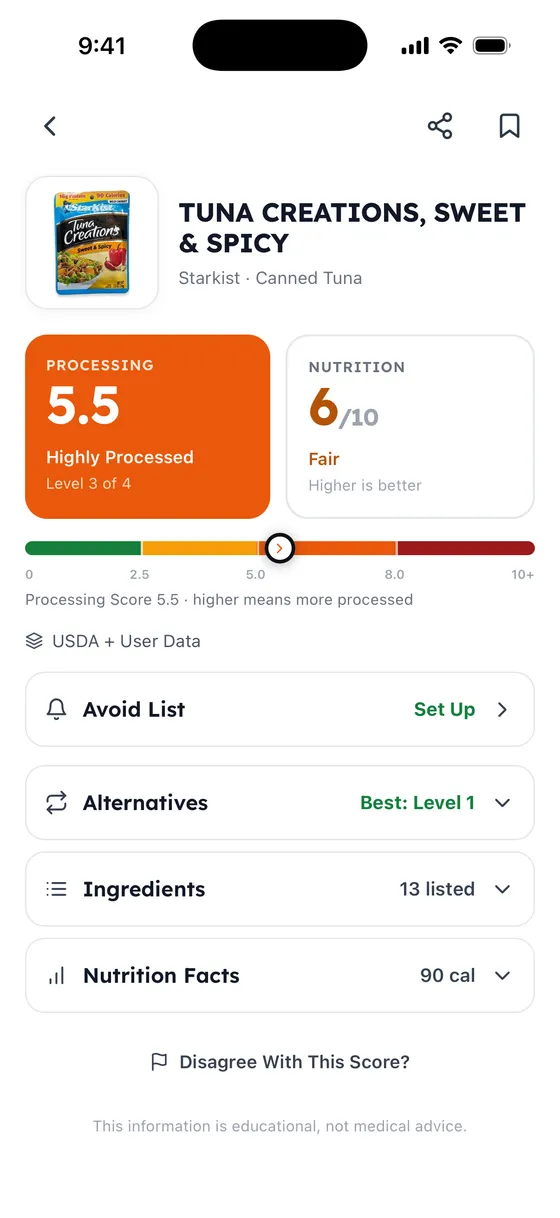
Frequently asked questions
Is coffee ultra-processed?
Plain black coffee is a single-ingredient drink. Roasting and brewing are traditional preparation methods that involve no additives, preservatives, or industrial processing aids. In our analysis, coffee products average a Processing Score of 4.0, which is Level 2.
Is instant coffee ultra-processed?
Pure instant coffee (coffee alone, no additives) is moderately processed: the freeze-drying or spray-drying step is industrial but adds nothing to the product. Flavored instant coffee mixes with added sugar, powdered creamer, and artificial flavors are far more processed.
Is Coffee-mate creamer ultra-processed?
Coffee-mate and similar creamers typically contain water, sugar, vegetable oil, sodium caseinate, and dipotassium phosphate with no actual cream. The "creaminess" comes from oil emulsified with industrial stabilizers. Search Coffee-mate to see its own average.
What about cold brew coffee?
Homemade cold brew concentrate (coffee steeped in cold water) is as simple as plain coffee, and so is commercial bottled cold brew with only coffee and water. Flavored or sweetened bottled cold brew is more processed, depending on the additive list.