
Key findings
- 1Naturally brewed soy sauce ferments for 6-8 months, producing over 300 distinct flavor compounds and no additives needed
- 2Chemical hydrolysis uses hydrochloric acid to break down soy protein in 2-3 days, producing an inferior product that requires caramel color and corn syrup to compensate
- 3In our analysis, soy sauce averages a Processing Score of 4.9, which is Level 2; naturally brewed and chemically produced bottles sit on the same shelf, so the label decides
Why is Soy Sauce Level 2 on average?
The divide between naturally brewed and chemically hydrolyzed soy sauce is one of the starkest processing contrasts in any single product category. Traditional brewing combines soybeans, roasted wheat, water, and salt, then inoculates with Aspergillus molds. The mash (moromi) ferments for 6-8 months, during which enzymatic reactions produce over 300 flavor compounds, amino acids, and the characteristic deep umami. Chemical hydrolysis, by contrast, treats defatted soy meal with hydrochloric acid at high temperature, breaking proteins into amino acids in 2-3 days. The result has a harsh, one-dimensional flavor, so manufacturers add caramel color (for visual similarity), corn syrup (for sweetness), and sodium benzoate (preservative). The naturally brewed product needs none of these additions; time and biology do the work. In our analysis, soy sauce averages a Processing Score of 4.9, which is Level 2.
How 360 soy sauce products break down
Share of products at each processing level, in our analysis.
Soy Sauce brand comparison
From least to most processed in our database.
How to read a soy sauce label
- 1
"Naturally brewed" on the label indicates traditional fermentation, look for this specific phrase
- 2
The ingredient list for naturally brewed soy sauce should be: water, soybeans, wheat, salt; 4 ingredients
- 3
Caramel color, corn syrup, and sodium benzoate signal chemically hydrolyzed soy sauce
- 4
Hydrolyzed soy/vegetable protein in the ingredient list means acid hydrolysis, not fermentation
Ketzal for iPhone
Got Soy Sauce At Home?
Scan yours in Ketzal to see how your exact product scores, not just the average, plus a less processed swap.
Scan It Free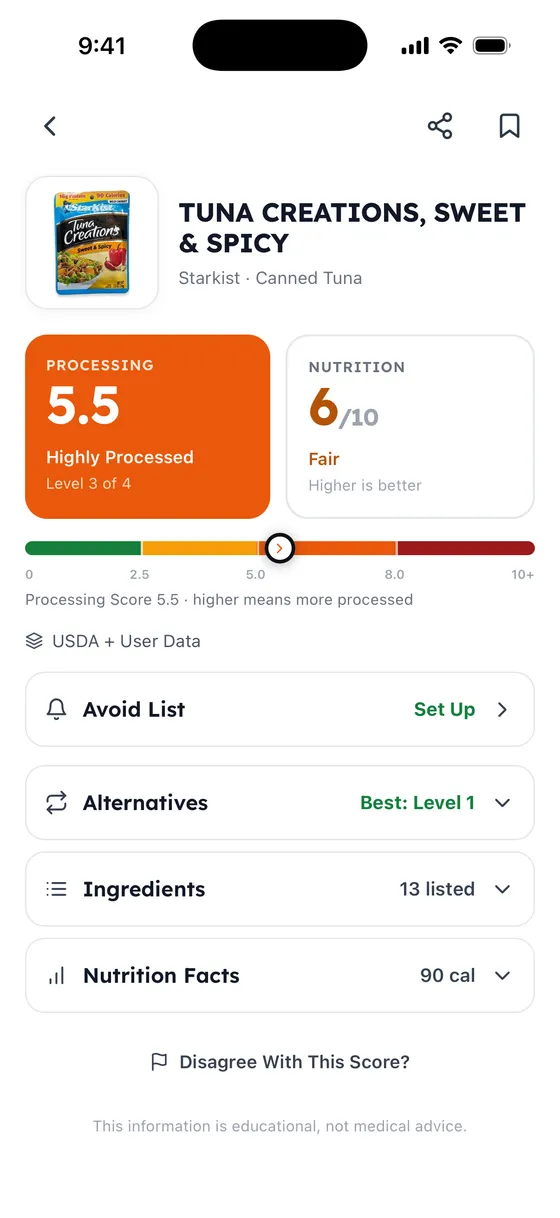
Frequently asked questions
How can I tell if soy sauce is naturally brewed?
Check the label for "naturally brewed" and the ingredient list: it should contain only water, soybeans, wheat, and salt. If you see "hydrolyzed soy protein," caramel color, or corn syrup, it is chemically produced. La Choy is chemically hydrolyzed; Kikkoman is naturally brewed.
Is tamari less processed than soy sauce?
Tamari is traditionally made with little or no wheat (making it often gluten-free) but uses the same natural fermentation process. Its processing is equivalent to naturally brewed soy sauce. Some commercial tamari brands do add preservatives, so check labels.
Is low-sodium soy sauce more processed?
Kikkoman Less Sodium is naturally brewed identically, then has some sodium removed after fermentation. It is the same brewing process with one additional extraction step. Chemically produced low-sodium soy sauce, however, carries the additives of the hydrolyzed method and is far more processed.