
What are refined grains?
Refined grain ingredients have had the bran and germ removed during milling, leaving primarily the starchy endosperm. Common refined grain products include white flour, enriched flour, bleached flour, white rice, degerminated cornmeal, and refined wheat products. Refinement produces lighter-colored, finer-textured ingredients with longer shelf life than whole grains, but removes dietary fiber and certain nutrients present in the bran and germ. The degree of grain refinement is one factor considered in food processing level classification systems, with highly refined, bleached, and chemically treated flours indicating a higher level of processing than traditionally milled alternatives.
Which foods contain refined grains?
Refined grain ingredients are found in white bread, pasta, crackers, cookies, cakes, pastries, pizza dough, tortillas, white rice, breakfast cereals, snack foods, breading and coating mixes, gravies, and the majority of conventional grain-based processed foods.
Ketzal for iPhone
Check What's Already In Your Kitchen.
Scan a barcode, on the shelf or in your pantry, and see both scores in seconds. Free, no account needed.
Scan It Free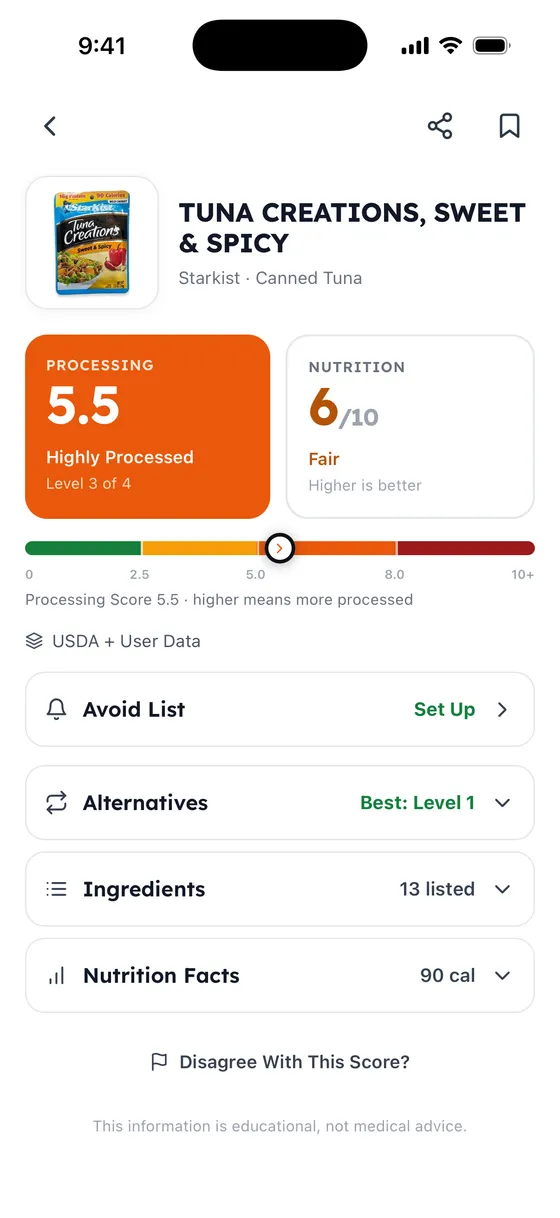
Also known as
Refined Grains can appear in ingredient lists under several names. If you see any of the following, this is the ingredient family you are looking at:
Function
Refined grain ingredients provide the fine texture, light color, and neutral flavor that many consumers and manufacturers prefer in baked goods, pasta, and other grain-based products. White flour produces lighter, softer bread and pastries compared to whole wheat flour. Refined starches provide smooth thickening in sauces without the speckling of whole grain particles. The removal of bran and germ also improves shelf stability by eliminating the oils in the germ that can become rancid. In bread making, refined flour produces higher-rising loaves with finer, more uniform crumb structure.
Sources
Refined grains are produced through roller milling, which separates the starchy endosperm from the bran and germ through a series of progressively finer rollings and siftings. White rice is produced by removing the bran layers from brown rice through milling and polishing. Enriched flour has iron, thiamin, riboflavin, niacin, and folic acid added per FDA standards of identity. Bleached flour is treated with chemical agents (benzoyl peroxide, chlorine dioxide, or acetone peroxide) to whiten the flour and modify its baking properties. Bromated flour has potassium bromate added as a dough strengthener.
Health considerations
Refined grains have had the bran (fiber) and germ (certain nutrients and oils) removed during milling. FDA standards of identity require enriched flour to contain added iron, thiamin, riboflavin, niacin, and folic acid. Folic acid fortification of enriched grain products was mandated by the FDA in 1998. Bleaching agents used in flour processing are regulated as food additives. Wheat is a major allergen under FALCPA.
This information is for educational purposes only and does not constitute medical advice.
Regulatory
The FDA maintains standards of identity for enriched flour, enriched bread, enriched macaroni products, and enriched rice specifying required levels of added nutrients. Bleaching agents are regulated as food additives with specific approved uses and levels. Potassium bromate is permitted in the US but not approved in the EU, Canada, and several other countries. The Dietary Guidelines for Americans recommend that at least half of grain intake come from whole grains rather than refined grains.