
Key findings
- 1A plain salmon fillet (fresh or frozen) is a single ingredient and one of the simplest, least processed foods available
- 2Canned salmon is among the least processed canned foods and retains most of its nutritional value including omega-3 fatty acids
- 3The processing jump from plain salmon to salmon burgers or pre-seasoned fillets is significant, always check ingredient counts on value-added salmon products
Why is Salmon Level 2 on average?
Salmon is one of the least processed proteins available when purchased fresh or frozen. A salmon fillet is a single ingredient requiring no additives, preservatives, or processing aids. Freezing is purely physical preservation. Canned salmon involves cooking in the can with salt and water, a simple preservation method dating to the early 1800s. The bones and skin in canned salmon soften during canning and provide additional calcium. Smoked salmon (lox, nova) adds a curing step with salt and sometimes sugar, then cold or hot smoking. The processing escalation begins with value-added products: pre-seasoned fillets with sauces containing modified starch and "natural flavors," salmon burgers with binders (methylcellulose, breadcrumbs, egg whites), and breaded salmon patties with industrial coatings. Wild-caught vs. farm-raised is a sourcing distinction, not a processing one, and both are a single ingredient as plain fillets. In our analysis, salmon products average a Processing Score of 3.4, which is Level 2.
How 1,470 salmon products break down
Share of products at each processing level, in our analysis.
Salmon brand comparison
From least to most processed in our database.
How to read a salmon label
- 1
Fresh or frozen salmon fillets should list one ingredient: salmon (some frozen may add a salt water glaze)
- 2
Canned salmon: look for "salmon, salt, water"; avoid canned products with added broths, flavors, or oils beyond these basics
- 3
Pre-marinated or seasoned salmon: check for modified food starch, "natural flavors," and preservatives in the sauce
- 4
Salmon burgers and patties: check for binders like methylcellulose, breadcrumbs, and fillers; these make the product more processed
Ketzal for iPhone
Got Salmon At Home?
Scan yours in Ketzal to see how your exact product scores, not just the average, plus a less processed swap.
Scan It Free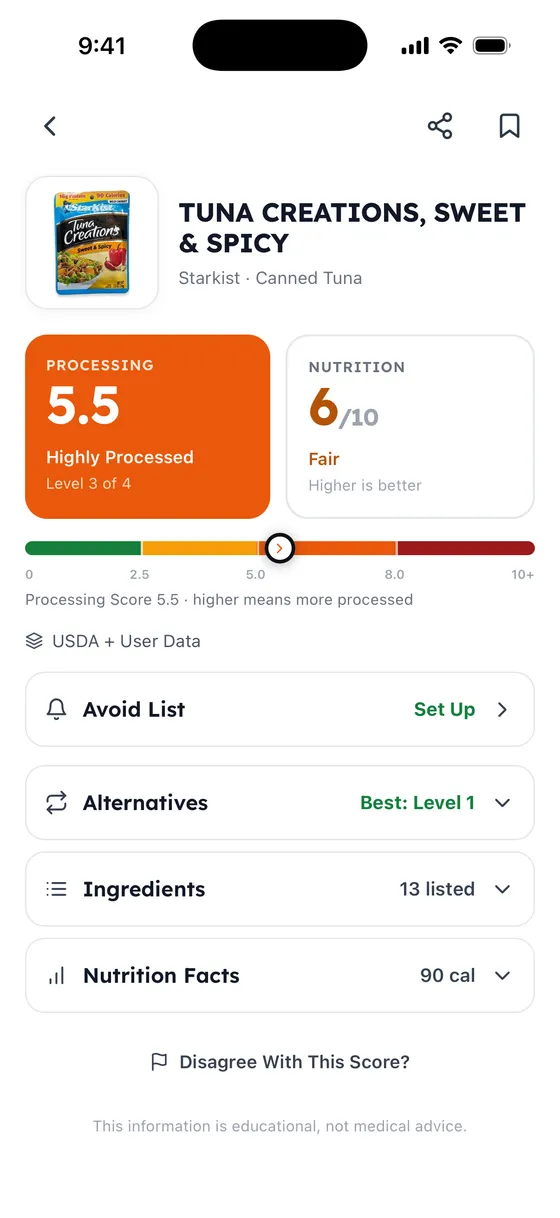
Frequently asked questions
Is canned salmon ultra-processed?
Canned salmon is typically just salmon, salt, and water cooked in the can. It retains omega-3s and the softened bones provide calcium. It is one of the least processed canned protein sources available.
Is smoked salmon ultra-processed?
Traditional smoked salmon (lox, nova) is cured with salt and smoked, both ancient preservation methods. Some commercial smoked salmon adds "natural smoke flavoring" instead of real smoking, which is slightly more processed. Check ingredient lists for additives beyond salmon, salt, and sugar.
Is farm-raised salmon more processed than wild-caught?
No. Farm-raised vs. wild-caught describes how the fish was raised, not how it was processed after harvest. Both are a single ingredient as plain fillets. The differences are in nutrition and environmental impact, not processing.
Are frozen salmon fillets processed?
Freezing is physical preservation, not processing in the NOVA sense. Frozen salmon fillets are as simple as fresh. Some may have a thin salt-water glaze to prevent freezer burn; this does not change the classification.