

Why Breakfast Is the Easiest Meal to Fix
Breakfast is where most people consume the highest concentration of ultra-processed foods without realizing it. Commercial cereal, flavored instant oatmeal, toaster pastries, granola bars, flavored yogurt, white toast with margarine, and orange juice from concentrate. These form the backbone of the typical morning routine, and nearly every one of them scores above 7.0 on our Processing Scale. A standard American breakfast of cereal with skim milk, a glass of orange juice, and a granola bar can easily average a Processing Score above 10.0 before you leave the house.
The good news is that breakfast is also the single easiest meal to fix. Unlike dinner, which often involves complex recipes and multiple components, breakfast thrives on simplicity. Many of the best non-ultra-processed breakfasts require fewer ingredients, less time, and less skill than their packaged counterparts. Cracking two eggs into a pan takes 5 minutes. Spooning plain yogurt into a bowl with fruit takes 2 minutes. Eating a banana with a tablespoon of almond butter takes 30 seconds. These are not aspirational meals that require a lifestyle overhaul. They are ordinary foods that people already eat.
The impact of fixing breakfast is outsized. If breakfast currently accounts for 40 percent of your daily ultra-processed food intake (which our data suggests is common), then replacing it with whole-food alternatives can cut your overall UPF consumption nearly in half without changing lunch or dinner at all. For a deeper look at what makes foods ultra-processed and why it matters, see our guide on what ultra-processed foods are.
The simple swap principle: You do not need to reinvent your morning routine. In most cases, replacing a single packaged product with its whole-food equivalent is enough to drop a breakfast from ultra-processed to minimally processed. Flavored yogurt becomes plain yogurt with fresh berries. Instant oatmeal packets become plain oats with honey. Commercial granola becomes homemade granola. Same meal structure, dramatically different processing scores.
5-Minute Breakfasts · No Cooking Required
The most common excuse for reaching for packaged breakfast foods is time. But the breakfasts below all take under 5 minutes to prepare, and several require zero preparation at all. If you can open a container and pick up a spoon, you can make these.
5-minute no-cook breakfast ideas with prep times
Notice that none of these require specialty ingredients or unusual effort. They use foods you can find at any grocery store. For more on how Greek yogurt and oatmeal score on the processing scale, see our detailed analyses.
Hot Breakfasts Under 15 Minutes
If you prefer a warm breakfast, these options all come together in under 15 minutes using whole ingredients. The key to keeping hot breakfasts non-ultra-processed is using basic ingredients from your kitchen rather than pre-made mixes, seasoning packets, or frozen convenience products.
Hot breakfasts under 15 minutes with prep times
These hot breakfasts carry far shorter ingredient lists than their packaged equivalents. A frozen breakfast sandwich and scrambled eggs with vegetables from scratch sit in the same meal category with vastly different ingredient profiles. Choosing real bread with a short ingredient list is key for any toast-based breakfast.
Meal Prep Breakfasts · Make Ahead, Eat All Week
The most effective strategy for consistently eating non-ultra-processed breakfasts is batch preparation. Spending 30 to 60 minutes on a Sunday gives you grab-and-go options for the entire week, options that are faster than any drive-through and far less processed. The critical difference between home meal prep and commercial convenience foods is ingredient control: you choose every ingredient that goes in.
Make-ahead meal prep breakfasts with prep times
Compare these to their commercial equivalents: store-bought granola bars, frozen breakfast burritos and instant flavored oatmeal packets. The homemade versions use the same base ingredients but skip the long list of industrial additives that push processing scores into ultra-processed territory.
Freezer tip: Egg muffin cups, breakfast burritos, and baked oatmeal bars all freeze well for up to 3 months. Dedicate one Sunday per month to a larger batch, and you can rotate through different options all month without any daily prep time beyond reheating.
Weekend Breakfasts · Worth the Extra Time
When you have more time on weekends, breakfast becomes a chance to cook something genuinely satisfying without any processing compromises. These recipes take 20 to 45 minutes but produce meals that feel indulgent while remaining entirely composed of whole, recognizable ingredients.
Weekend breakfasts with prep times
Every one of these weekend breakfasts uses ingredients you can find at any grocery store. Compare that to a typical weekend brunch at a chain restaurant, where frozen pre-made pancake batter, processed breakfast meats, and artificial syrup can push the meal's processing score far higher. Cooking at home on weekends is not just healthier; it tastes better because you control the quality of every ingredient.
Common Breakfast Items · UPF Check
This table compares common breakfast foods in their typical commercial form against their whole-food alternatives. The differences in the ingredient list are stark.
Common breakfast items and their whole-food alternatives
The pattern is consistent: the whole-food alternative carries a short list of recognizable ingredients and the commercial version does not. The reason is simple: commercial products add industrial ingredients (emulsifiers, preservatives, artificial flavors, modified starches) to extend shelf life, improve texture, and reduce production costs. When you make the same food at home, those additives are unnecessary. For deeper comparisons on specific items, browse our cereal analysis and butter analysis.
Building a Non-UPF Breakfast Pantry
The easiest way to ensure you always have a non-ultra-processed breakfast available is to keep the right staples on hand. When your kitchen is stocked with these basics, assembling a minimally processed breakfast takes less effort than pouring a bowl of commercial cereal. None of these items require refrigeration beyond eggs and dairy, and most have shelf lives of weeks or months.
Refrigerator Essentials
Refrigerator essentials
Pantry Staples
Pantry staples
Freezer and Extras
Freezer and extra staples
With these staples on hand, you can make every single breakfast idea listed in this guide without a special trip to the store. Most of the pantry items cost less per serving than their ultra-processed alternatives. A 2-pound bag of rolled oats provides roughly 30 servings for under $4. That is about $0.13 per breakfast before toppings. A box of flavored instant oatmeal packets provides 8 servings for $4 to $5, roughly $0.55 per serving with a far longer ingredient list.
For a complete approach to stocking your kitchen with minimally processed staples across all meals, see our shopping guide, which covers store-by-store strategies and department-level recommendations.
Bread buying tip: Real bakery bread without preservatives goes stale quickly. The solution is to buy a good loaf, slice it, and freeze the slices. Pull out one or two slices each morning and toast directly from frozen. It tastes fresh every time, and you avoid the preservatives and dough conditioners found in shelf-stable commercial bread.
Ketzal for iPhone
Find The Swap For What You Already Buy.
Scan a product you use and Ketzal suggests less processed options from the same category.
Find My Swap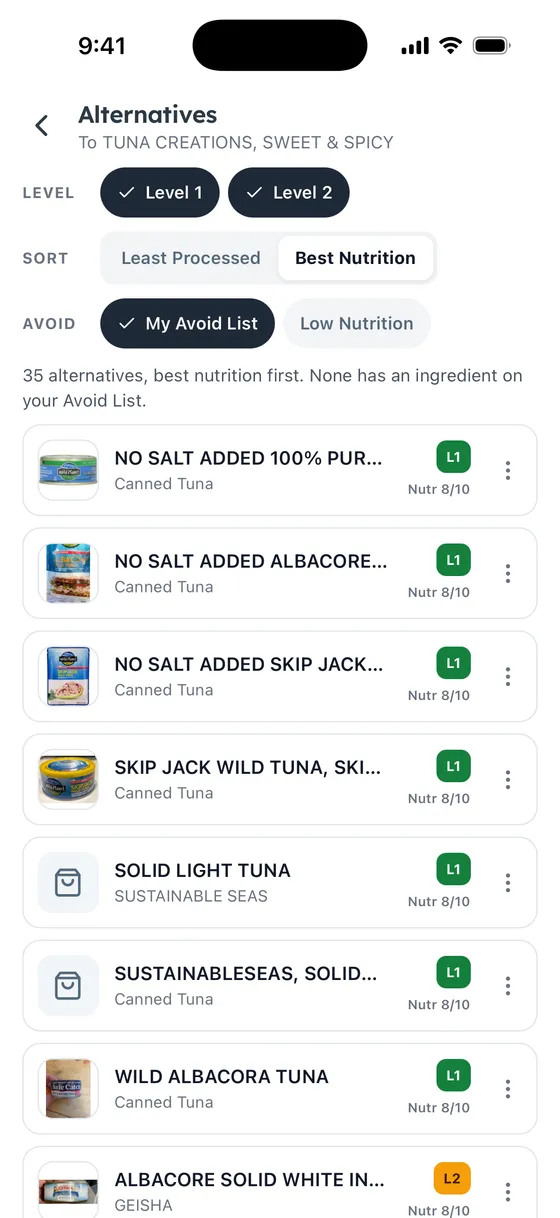
Frequently Asked Questions
What makes most commercial breakfast foods ultra-processed?
Most commercial breakfast cereals, granola bars, flavored yogurts, toaster pastries, and frozen breakfast sandwiches contain additives that serve industrial purposes rather than nutritional ones. These include emulsifiers like soy lecithin, artificial flavors, preservatives like BHT and TBHQ, high-fructose corn syrup, and modified starches. A typical box of breakfast cereal contains 15 to 25 ingredients, many of which you would never use in a home kitchen. By contrast, a bowl of plain oatmeal with fruit contains 2 to 3 whole-food ingredients and scores a Processing Score under 2.0.
Are quick breakfasts always more processed than cooked ones?
Not at all. Many of the fastest breakfasts you can prepare are also among the least processed. Plain Greek yogurt with fresh fruit takes under 2 minutes. A banana with almond butter takes 30 seconds. Overnight oats prepared the night before require zero morning prep time. The key is choosing whole-food ingredients rather than packaged convenience products. A homemade breakfast with 3 whole ingredients will almost always be faster and less processed than heating up a frozen breakfast sandwich.
How can I meal prep breakfasts without them becoming ultra-processed?
The difference between home meal prep and commercial convenience foods is ingredient control. When you batch-cook egg muffin cups, you use eggs, vegetables, cheese, and salt, typically 4 to 6 recognizable ingredients. A commercial frozen egg cup uses the same base ingredients plus modified food starch, sodium phosphates, artificial flavors, and preservatives. The best meal prep breakfasts are baked oatmeal, egg muffin cups, homemade granola, and smoothie prep bags, all of which store well for 4 to 5 days in the refrigerator or up to 3 months in the freezer.
Is store-bought bread acceptable for a non-UPF breakfast?
It depends entirely on the bread. Most commercial sliced bread from major brands contains dough conditioners like DATEM, preservatives like calcium propionate, added sugars, and emulsifiers. However, bakery-fresh sourdough, artisan breads with 4 to 5 ingredients (flour, water, yeast, salt, sometimes olive oil), and brands that keep ingredient lists short carry far fewer additives. When buying bread for breakfast toast, check the ingredient list and aim for under 7 ingredients with no words you cannot pronounce. Our analysis of bread processing covers this in detail.
What are the best non-UPF breakfast options for kids?
Children often prefer the flavors and textures of ultra-processed breakfast foods because those products are engineered for maximum palatability. The transition strategy that works best is gradual substitution. Start with plain yogurt sweetened with a small amount of honey and fresh berries instead of flavored yogurt. Replace commercial cereal with plain oats topped with banana slices and a drizzle of maple syrup. Make pancakes from scratch using just flour, eggs, milk, and baking powder. Most kids cannot tell the difference from a mix, and the ingredient list shrinks to four items. Involving children in preparation also increases their willingness to eat whole-food breakfasts.