
Quick answer
Kombucha (Level 1-2) is dramatically less processed than soda (Level 4). Kombucha's fermentation is a natural biological process, while soda requires industrial ingredient synthesis. The processing gap is 2-3 levels apart.
Processing levels can vary significantly between brands and specific products within each category. Always check the ingredient list of the specific product you are considering. Use our product search to look up exact processing scores. These comparisons evaluate processing level and ingredient composition only. They do not account for taste, price, convenience, cultural significance, or individual dietary needs.
How do they compare by the numbers?
Sample products from each


Ketzal for iPhone
Have One Of These At Home?
Scan it in Ketzal to see how your exact product scores, and what to swap it for.
Scan It Free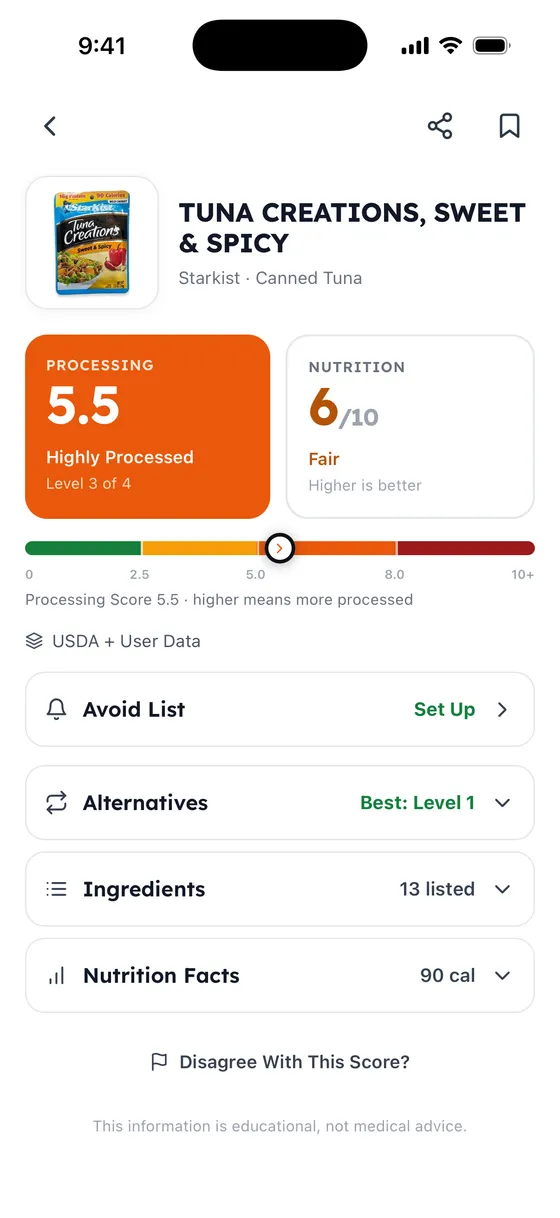
Frequently asked questions
Is kombucha a good replacement for soda?
From a processing standpoint, absolutely. Kombucha (Level 1-2) uses natural fermentation with tea, sugar, and live cultures. Soda (Level 4) uses HFCS, artificial colors, and chemical preservatives. Kombucha also has far less residual sugar (2-8g vs 39g per serving) since fermentation consumes much of the original sugar.
Is all kombucha equally unprocessed?
No. Traditional kombucha with just tea, sugar, and cultures is Level 1-2. Some commercial kombuchas add fruit juice concentrates, natural flavors, or additional sweeteners that push them to Level 2-3. Check the ingredient list; the simplest kombuchas have 4-5 ingredients.