
Key findings
- 1The lye (sodium hydroxide) bath that gives pretzels their distinctive crust is a centuries-old technique, not industrial processing; it converts to harmless sodium carbonate during baking
- 2A basic pretzel (flour, water, yeast, salt, lye) is one of the simpler baked snacks available
- 3In our analysis, pretzels average a Processing Score of 9.2, which is Level 4
- 4Mass-market brands often add corn syrup, soybean oil, and malt extract, which makes them more processed
Why is Pretzels ultra-processed on average?
The pretzel's signature dark, glossy crust comes from dipping the shaped dough in a dilute lye (sodium hydroxide) solution before baking: a technique dating to medieval European monasteries. The lye bath triggers the Maillard reaction at a lower temperature, creating the characteristic color and flavor. This is a traditional chemical process, not industrial ultra-processing. Where processing escalates is in commercial versions: soft pretzel chains add butter, sugar, and dough conditioners, and mass-market hard pretzels often add corn syrup, vegetable oils, and malt extract for flavor and shelf stability. The simplest hard pretzels (just flour, salt, yeast, lye) still exist but are less common than the additive-enhanced versions. In our analysis, pretzels average a Processing Score of 9.2, which is Level 4.
How 2,603 pretzels products break down
Share of products at each processing level, in our analysis.
Pretzels brand comparison
From least to most processed in our database.
How to read a pretzels label
- 1
Simple hard pretzels should list: wheat flour, salt, yeast, and possibly malt, four or five ingredients
- 2
Corn syrup, soybean oil, and dough conditioners indicate more processing in commercial brands
- 3
Sodium hydroxide (lye) is traditional, not an industrial additive, and it has been used for centuries
- 4
Soft pretzels from mall chains add significant butter, sugar, and dough conditioners
Ketzal for iPhone
Got Pretzels At Home?
Scan yours in Ketzal to see how your exact product scores, not just the average, plus a less processed swap.
Scan It Free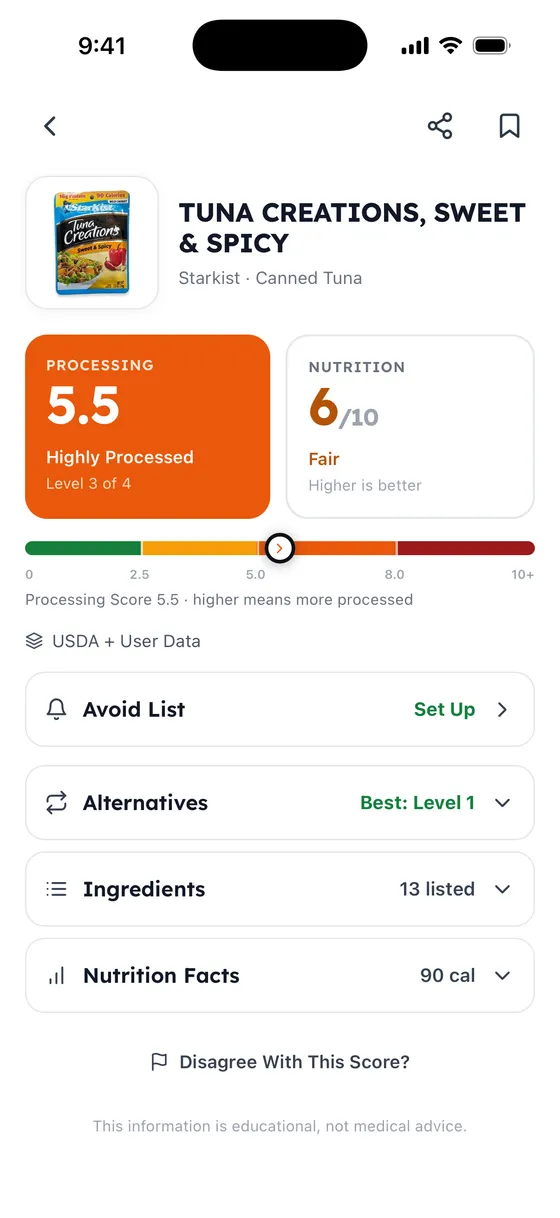
Frequently asked questions
Is the lye in pretzels safe?
Yes. Food-grade sodium hydroxide (lye) has been used in pretzel-making for centuries. During baking, the lye converts to sodium carbonate, which is harmless. Nixtamalized corn uses a similar alkaline process. The lye bath is traditional processing, not industrial chemistry.
Are soft pretzels more processed than hard pretzels?
It depends on the specific product. A fresh bakery soft pretzel (flour, water, yeast, salt, lye) is a short list of recognizable ingredients. A mall-chain pretzel with added butter, sugar, and conditioners is more processed, and so are mass-market hard pretzels with corn syrup.
What are the simplest pretzel brands?
Look for brands listing only wheat flour, salt, yeast, and malt or lye. Some artisan brands maintain simpler ingredient lists. Compare to brands adding corn syrup and oils.