
Key findings
- 1Whey protein isolate undergoes ion-exchange filtration and spray-drying and is one of the most industrially intensive ingredient processes in the food supply
- 2Cellulose gel (microcrystalline cellulose) used for creaminess is literally derived from processed wood pulp
- 3A glass of whole milk with cocoa powder provides protein from a short list of recognizable ingredients, a dramatically simpler alternative to any commercial protein shake
Why is Protein Shakes ultra-processed on average?
Whey protein isolate (the base of most shakes) is produced by filtering whey (a cheese byproduct) through ceramic membranes at precise pH levels, then spray-drying the permeate into powder at 180-200C. This ion-exchange or cross-flow microfiltration process isolates protein to 90%+ purity, stripping away the lactose, fat, and immunoglobulins present in whole whey. The resulting powder has no resemblance to any whole food. Cellulose gel (microcrystalline cellulose) and cellulose gum are derived from wood pulp and used to simulate the creamy mouthfeel that real dairy provides naturally. In our analysis, ready-to-drink protein shakes average a Processing Score of 9.0, which is Level 4.
How 796 protein shakes products break down
Share of products at each processing level, in our analysis.
Protein Shakes brand comparison
From least to most processed in our database.
How to read a protein shakes label
- 1
Protein isolates (whey protein isolate, soy protein isolate) indicate industrial extraction, protein concentrate is slightly less processed
- 2
Cellulose gel and cellulose gum are wood pulp derivatives used as thickeners and fat replacers
- 3
Sucralose and acesulfame potassium are synthetic sweeteners that appear in virtually all commercial protein shakes
- 4
Shakes built on milk and cocoa with a short list of additives are simpler than most competitors
Ketzal for iPhone
Got Protein Shakes At Home?
Scan yours in Ketzal to see how your exact product scores, not just the average, plus a less processed swap.
Scan It Free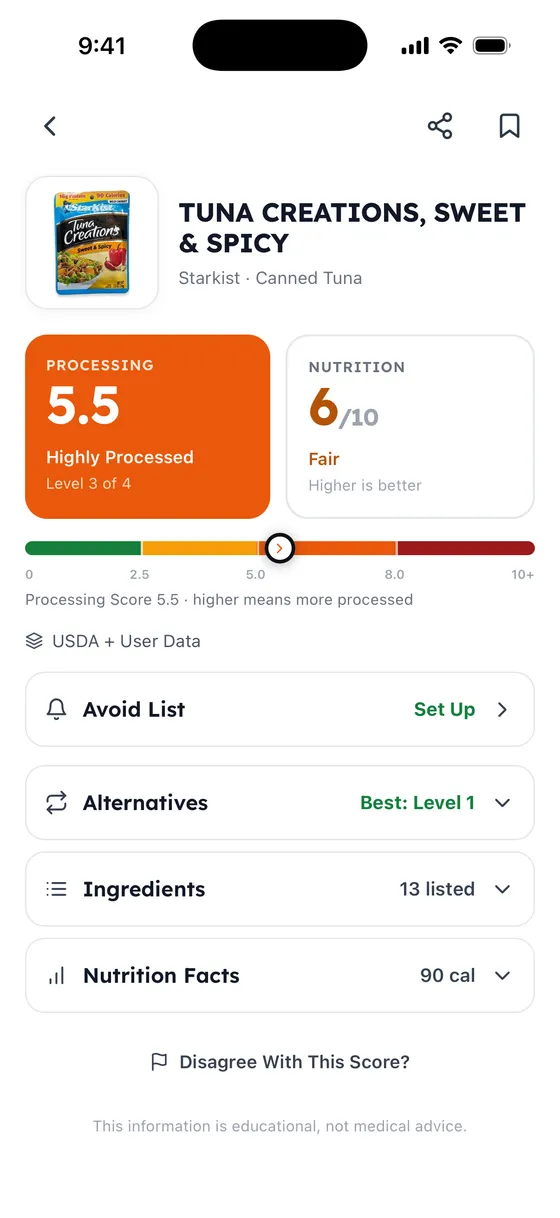
Frequently asked questions
Are protein shakes bad for you?
In our analysis, ready-to-drink protein shakes average a Processing Score of 9.0, which is Level 4. They deliver protein effectively, but through industrial ingredients. Whether the nutritional tradeoff is worthwhile depends on individual dietary needs and goals.
What is the least processed protein shake?
Blending milk (or Greek yogurt), a banana, and natural peanut butter creates a high-protein shake with no industrial ingredients. Among commercial options, brands using milk protein concentrate rather than isolate with minimal additives are the simplest.
Is whey protein isolate ultra-processed?
Yes. Whey protein isolate is produced through industrial microfiltration and spray-drying to achieve 90%+ protein purity. It is a highly refined ingredient that does not exist outside of industrial manufacturing. Whey protein concentrate is slightly less refined but still industrially produced.
Are plant-based protein shakes less processed?
No. Plant-based protein shakes (pea protein, rice protein) undergo similar industrial extraction. Pea protein isolate is produced through alkaline extraction, acid precipitation, and spray-drying; comparable in complexity to whey processing.