
Key findings
- 1Homemade overnight oats are very simple; cold soaking is even simpler than cooking
- 2The oats are identical to regular rolled oats; "overnight oats" is a preparation method, not a different product
- 3In our analysis, store-bought overnight oats average a Processing Score of 4.5, which is Level 2
- 4How processed a store-bought cup is depends on its added ingredients
Why is Overnight Oats Level 2 on average?
Overnight oats are not a distinct food product but a preparation method: raw or rolled oats are soaked in liquid (milk, yogurt, plant milk) for several hours, softening the starches through cold hydration rather than heat. This is arguably less processing than cooking oatmeal. The oats themselves are simply cleaned, hulled, steamed, and rolled. Store-bought versions introduce processing complexity: added sugars, natural flavors, thickeners (tapioca starch, locust bean gum), and preservatives to extend refrigerated shelf life from 1-2 days (homemade) to 1-2 weeks (commercial). In our analysis, store-bought overnight oats average a Processing Score of 4.5, which is Level 2.
How 66 overnight oats products break down
Share of products at each processing level, in our analysis.
Overnight Oats brand comparison
From least to most processed in our database.
How to read a overnight oats label
- 1
Homemade overnight oats (oats + liquid + optional fruit/seeds) are among the simplest preparations
- 2
Store-bought versions: check for added sugar, natural flavors, and thickeners in the ingredient list
- 3
Some commercial brands keep it simple (oats, milk, fruit), read the label to find them
- 4
Protein-enhanced overnight oats with whey isolate and sweeteners are more processed
Ketzal for iPhone
Got Overnight Oats At Home?
Scan yours in Ketzal to see how your exact product scores, not just the average, plus a less processed swap.
Scan It Free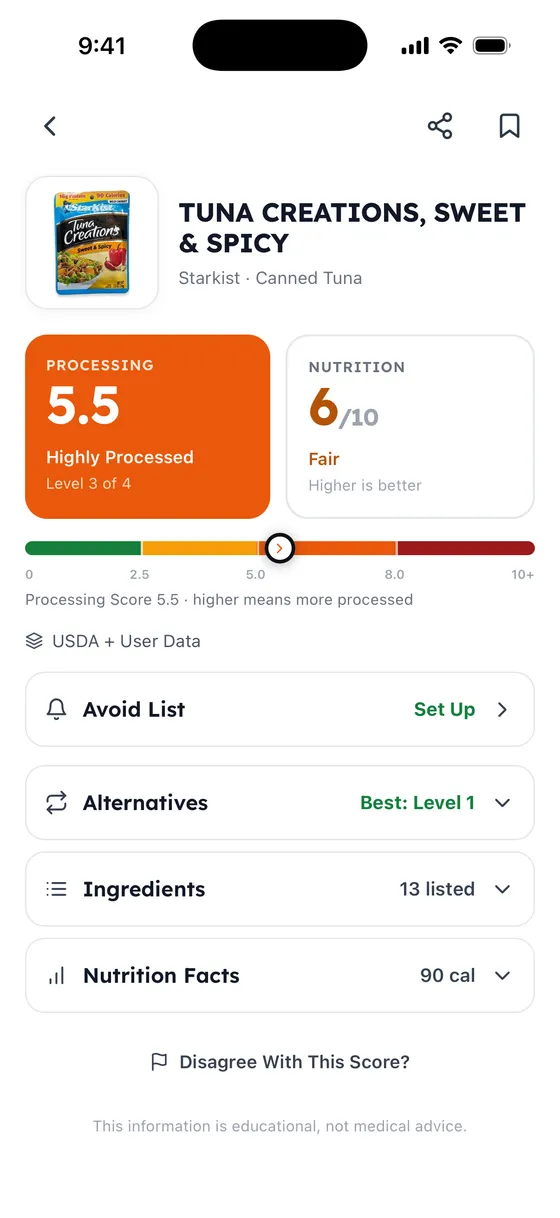
Frequently asked questions
Are overnight oats healthier than cooked oatmeal?
From a processing standpoint, both use the same oats. Overnight oats use cold soaking while cooked oatmeal uses heat; both are minimal preparation methods. The processing level is identical; the difference is technique.
Do overnight oats need to be cooked?
No. The overnight soaking process hydrates and softens the oats without heat. This cold hydration breaks down some starches and softens the oats enough to eat without cooking. It is one of the simplest food preparation methods; less processing than cooking.
Are store-bought overnight oats worth it?
From a processing perspective, homemade overnight oats are simpler than most store-bought versions. Commercial products add ingredients for shelf life and consistent flavor that are unnecessary when making them fresh at home.