
Key findings
- 1A homemade pot pie uses about 12 simple ingredients; commercial versions list far more
- 2Every component is individually industrialized; the crust, sauce, protein, and even the vegetables each contain their own additives
- 3The palm oil crust, soy-extended filling, and starch-thickened sauce bear little resemblance to their homemade counterparts
Why is Pot Pies ultra-processed on average?
A homemade pot pie requires a butter-based pastry crust (flour, butter, salt, water), a roux-thickened sauce (butter, flour, broth), and simple filling (chicken, peas, carrots, onion). The commercial version industrializes every component. The crust replaces butter with palm oil and adds modified food starch, BHT (antioxidant), and dough conditioners for uniform machine processing. The sauce uses modified food starch and xanthan gum instead of a roux, with autolyzed yeast extract providing umami that traditional broth supplies naturally. The chicken often includes soy protein isolate to extend the meat, sodium phosphates to retain water, and carrageenan as a binder. Even the peas and carrots may contain dextrose and modified starch. In our analysis, pot pie products average 44.0 ingredients and a Processing Score of 11.1, which is Level 4.
How 71 pot pies products break down
Share of products at each processing level, in our analysis.
Pot Pies brand comparison
From least to most processed in our database.
How to read a pot pies label
- 1
The crust alone often contains 10-15 ingredients; compare to homemade pastry's 4 ingredients (flour, butter, salt, water)
- 2
Soy protein isolate in the filling means the chicken has been extended with plant protein to reduce cost
- 3
Autolyzed yeast extract in the sauce is an MSG alternative replacing the flavor that real broth would provide
- 4
Palm oil replaces butter in the crust for cost and shelf stability, a significant quality and processing trade-off
Ketzal for iPhone
Got Pot Pies At Home?
Scan yours in Ketzal to see how your exact product scores, not just the average, plus a less processed swap.
Scan It Free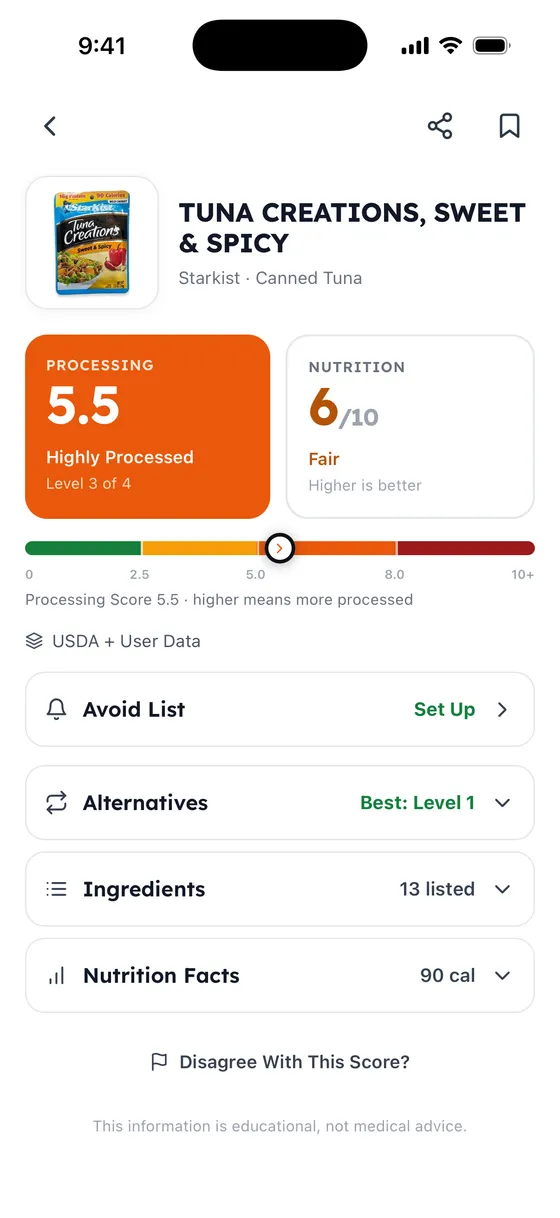
Frequently asked questions
Are Marie Callender's pot pies ultra-processed?
Marie Callender's pot pie labels list ingredients such as modified food starch, soy protein isolate, autolyzed yeast extract, sodium phosphates, and palm oil, the markers our Processing Score counts. Search the brand to see its own score.
Are pot pies healthy?
Commercial pot pies are calorie-dense (typically 700-1,000 calories per pie) and high in sodium (800-1,200mg). In our analysis, pot pie products average a Processing Score of 11.1, which is Level 4. A homemade pot pie with butter crust, real broth, and fresh vegetables is far less processed and allows control over portion size and ingredients.
How do I make a pot pie from scratch?
A simple pot pie needs pastry dough (flour, butter, salt, water), a filling of cooked chicken, peas, carrots, and onion in a butter-flour roux thinned with chicken broth. Bake at 400F until golden. This uses about 12 recognizable ingredients, far fewer than commercial versions.