
Key findings
- 1Pure matcha powder is a traditional stone-ground tea with no additives
- 2In our analysis, matcha products average a Processing Score of 2.8, which is Level 2
- 3The shade-growing technique changes the leaf chemistry naturally, not through any industrial process
- 4Pre-mixed matcha products with sweeteners and milk powder are significantly more processed and should be evaluated separately
Why is Matcha Level 2 on average?
Traditional matcha production is a centuries-old Japanese process. Tea plants (Camellia sinensis) are shade-covered for 3-4 weeks before harvest, which increases chlorophyll and L-theanine content. The leaves are steamed to halt oxidation, dried, de-stemmed (leaving only the leaf blade, called "tencha"), and stone-ground into a fine powder using granite mills at approximately 40 grams per hour. This slow grinding prevents heat buildup that would degrade flavor compounds. The entire process is mechanical and thermal, with no chemical additives at any stage. Ceremonial-grade and culinary-grade matcha differ in leaf quality and grinding precision, not processing level.
How 149 matcha products break down
Share of products at each processing level, in our analysis.
Matcha brand comparison
From least to most processed in our database.
How to read a matcha label
- 1
Pure matcha powder should list one ingredient: matcha (or green tea powder)
- 2
Ceremonial vs. culinary grade is a quality distinction, not a processing difference
- 3
Matcha latte mixes with sugar, milk powder, and maltodextrin are far more processed
- 4
Check the origin, Japanese matcha follows stricter production standards than many imports
Ketzal for iPhone
Got Matcha At Home?
Scan yours in Ketzal to see how your exact product scores, not just the average, plus a less processed swap.
Scan It Free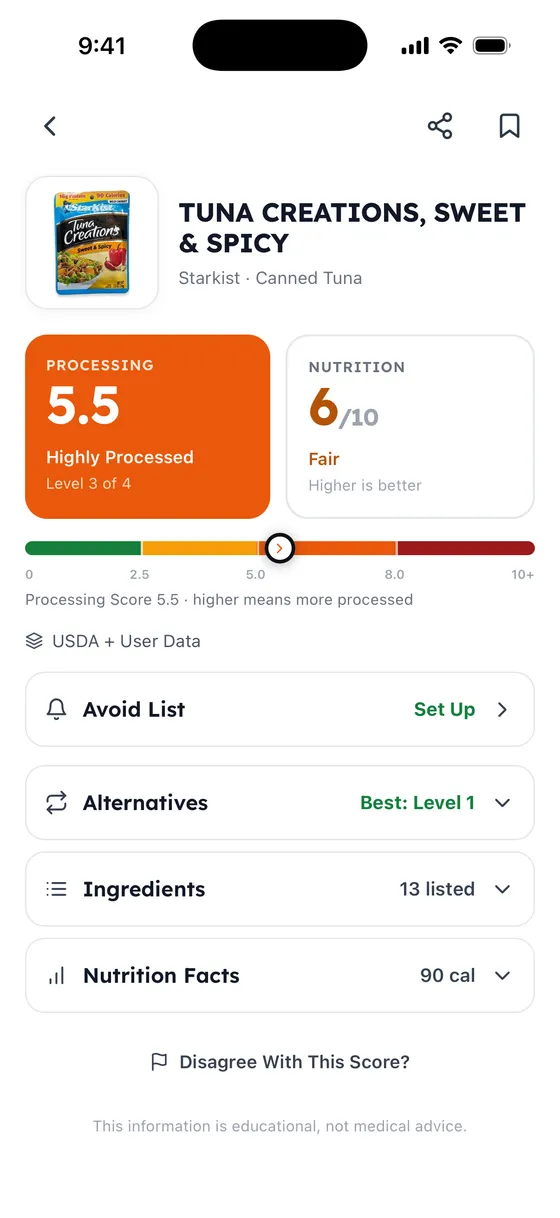
Frequently asked questions
Is matcha healthier than regular green tea?
From a processing standpoint, both matcha and loose-leaf green tea are simple, single-ingredient products. Matcha involves consuming the whole leaf rather than an infusion, which is a preparation difference, not a processing difference.
Is Starbucks matcha ultra-processed?
A sweetened matcha blend lists sugar alongside ground green tea, which makes it more processed than pure matcha. Ask how a coffee shop drink is made, or check the blend's ingredient list; pure matcha powder without added sugar is a single ingredient.
What is the difference between ceremonial and culinary matcha?
Both are produced identically; shade-grown, steamed, de-stemmed, and stone-ground. Ceremonial grade uses younger, more tender leaves and is ground more finely. The processing is the same; the difference is leaf quality.