
Key findings
- 1Commercial frozen chicken tenders inject the meat with water, modified food starch, and sodium phosphates; you are paying chicken prices for 15-20% added water
- 2The breading system alone contains 15+ ingredients including enriched bleached flour, modified starch, and autolyzed yeast extract
- 3Homemade chicken tenders (sliced breast, egg wash, panko breadcrumbs, oven-baked) use about 6 ingredients, far less processing, and no added water
Why is Frozen Chicken Tenders Level 3 on average?
The chicken in frozen tenders is not simply a breaded piece of meat. Manufacturers inject or marinate chicken breast in a solution containing water (up to 15-20% of the final weight), modified food starch (a binder), sodium phosphates (which force the meat to retain added water), salt, dextrose, and sometimes carrageenan. This "enhanced" chicken is then coated in a batter and breading system containing enriched bleached flour, modified corn starch, whey, leavening agents, spices, extractives of paprika (color), and sometimes autolyzed yeast extract. The product is par-fried in vegetable oil (often with TBHQ) and frozen. The result is a chicken tender that can be 15-20% added water by weight; water that consumers pay chicken prices for. Reading "contains up to 15% solution" on the package confirms this practice. In our analysis, frozen chicken tender products average a Processing Score of 7.8, which is Level 3.
How 556 frozen chicken tenders products break down
Share of products at each processing level, in our analysis.
Frozen Chicken Tenders brand comparison
From least to most processed in our database.
How to read a frozen chicken tenders label
- 1
"Contains up to 15% solution" means the chicken has been injected with water, starch, and phosphates to increase weight
- 2
Sodium phosphates force the meat to retain added water; this is why frozen tenders release liquid when cooked
- 3
TBHQ is a synthetic antioxidant often present in the frying oil used for par-cooking
- 4
Look for brands listing just "chicken breast" without "containing" or "with up to X% solution"
Ketzal for iPhone
Got Frozen Chicken Tenders At Home?
Scan yours in Ketzal to see how your exact product scores, not just the average, plus a less processed swap.
Scan It Free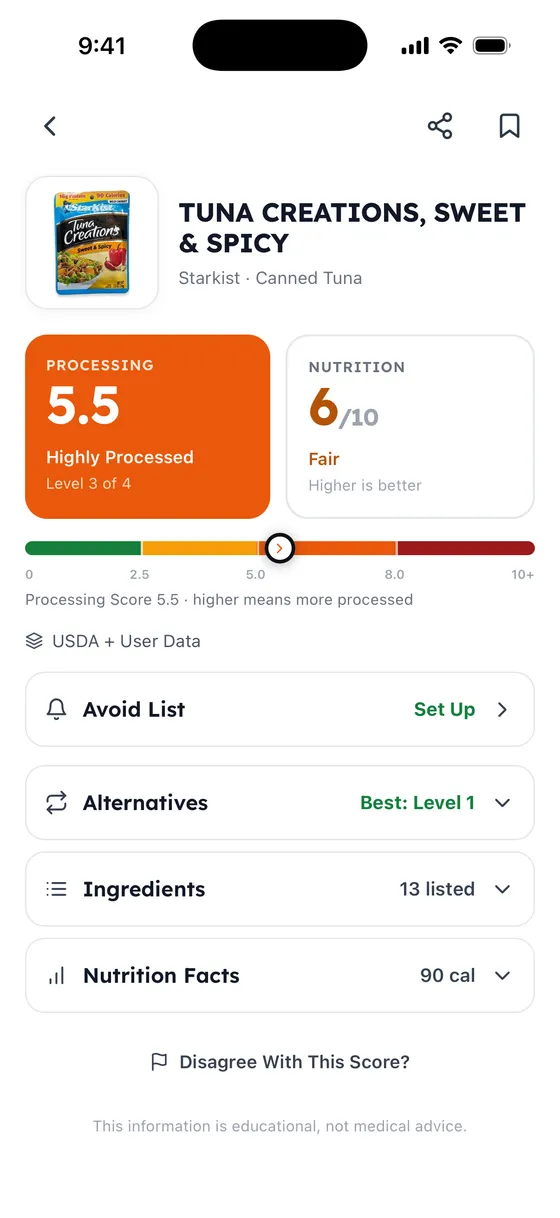
Frequently asked questions
Are frozen chicken tenders real chicken?
They contain real chicken breast, but it has been injected with a solution of water, modified food starch, sodium phosphates, and dextrose; typically 15-20% by weight. The meat is real but significantly modified from its natural state.
What is the healthiest frozen chicken tender?
Look for brands listing "chicken breast" without "containing" solution or "up to X% added." Some brands use simpler formulations; compare labels. The least processed option is making your own: slice chicken breast, dip in beaten egg, coat in seasoned panko, and bake or air-fry.
Why do frozen chicken tenders have so much sodium?
Sodium phosphates are injected into the chicken to force water retention (increasing weight and profit margin). Additional sodium comes from the breading, seasoning, and preservatives. A single serving can contain 400-600mg of sodium.