
Key findings
- 1Homemade energy balls (dates, nuts, oats, cocoa) are a whole-food snack
- 2Commercial energy balls with protein powder and syrup sweeteners are more processed than homemade
- 3Making energy balls at home requires only a food processor and 5 minutes and no baking needed
Why is Energy Balls Level 3 on average?
Homemade energy balls are among the simplest snack foods: whole dates provide natural sweetness and binding, nuts provide fat and protein, oats add structure, and cocoa or coconut adds flavor. The preparation is just blending and rolling, with no cooking, baking, or industrial processing required. Commercial energy balls and protein bites often add whey protein isolate, brown rice syrup, tapioca syrup, natural flavors, sunflower lecithin, and other ingredients that increase the processing. The gap between homemade and commercial versions is significant. In our analysis, energy ball products average a Processing Score of 5.8, which is Level 3.
How 21 energy balls products break down
Share of products at each processing level, in our analysis.
Energy Balls brand comparison
From least to most processed in our database.
How to read a energy balls label
- 1
The simplest energy balls list only whole foods: dates, nuts, oats, cocoa, coconut
- 2
Protein powder (whey isolate, pea protein) makes an energy ball more processed than a whole-food version
- 3
Tapioca syrup and brown rice syrup are processed sweeteners that replace the binding role of dates
- 4
Commercial brands with 10+ ingredients are significantly more processed than homemade
Ketzal for iPhone
Got Energy Balls At Home?
Scan yours in Ketzal to see how your exact product scores, not just the average, plus a less processed swap.
Scan It Free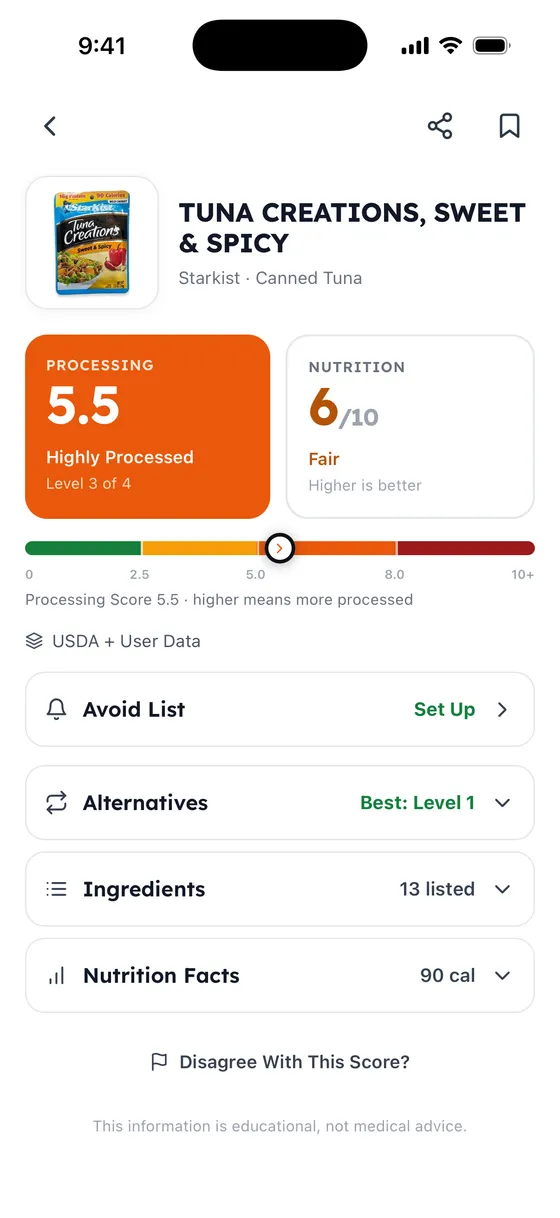
Frequently asked questions
Are energy balls ultra-processed?
Simple energy balls made from dates, nuts, oats, and cocoa are a whole-food snack. Commercial versions with protein isolates, syrup sweeteners, and natural flavors are more processed. In our analysis, energy ball products average a Processing Score of 5.8, which is Level 3.
Are energy balls a healthy snack?
Simple energy balls made from whole-food ingredients (dates, nuts, oats) are a snack with recognizable, minimally processed ingredients. They provide sugars, fiber, fat, and protein without industrial additives.
What should I look for in store-bought energy balls?
Choose brands listing only whole foods (dates, nuts, seeds, oats, cocoa) with no protein isolates, syrup sweeteners, or natural flavors. The ingredient list should read like a recipe you could make at home.