
Key findings
- 1Chimichurri is raw, uncooked, and requires no special equipment. It is just a knife and cutting board
- 2The vinegar and olive oil naturally preserve chimichurri for 1-2 weeks refrigerated without any added preservatives
- 3Homemade chimichurri is among the least processed condiments, alongside simple hot sauce, plain mustard, and vinegar
Why is Chimichurri Level 3 on average?
Chimichurri is one of the simplest and least processed condiments in any cuisine. The preparation involves finely chopping flat-leaf parsley, mincing garlic, mixing with dried oregano and red pepper flakes, then combining with red wine vinegar and olive oil. The entire process is mechanical; chopping and mixing. No heat is applied, no emulsification is required, and no preservatives are needed because the vinegar and oil naturally preserve it for 1-2 weeks refrigerated. The sauce is traditionally served fresh alongside grilled meats in Argentina and Uruguay. Unlike almost every other commercial condiment, chimichurri's very nature resists industrial processing, and the fresh herb flavor degrades quickly when preserved, which is why most chimichurri available in stores is refrigerated with a short shelf life, or it has been modified with preservatives and stabilizers that compromise its character. In our analysis, packaged chimichurri products average a Processing Score of 5.6, which is Level 3.
How 24 chimichurri products break down
Share of products at each processing level, in our analysis.
Chimichurri brand comparison
From least to most processed in our database.
How to read a chimichurri label
- 1
Homemade chimichurri needs 6 ingredients: parsley, garlic, oregano, red pepper flakes, vinegar, olive oil
- 2
Store-bought versions should list these same herbs and oil; avoid brands adding soybean oil or canola oil
- 3
Sodium benzoate or potassium sorbate in jarred chimichurri indicate shelf-life extension beyond its fresh character
- 4
Dried chimichurri mixes lose the fresh parsley flavor that defines the sauce, use fresh herbs
Ketzal for iPhone
Got Chimichurri At Home?
Scan yours in Ketzal to see how your exact product scores, not just the average, plus a less processed swap.
Scan It Free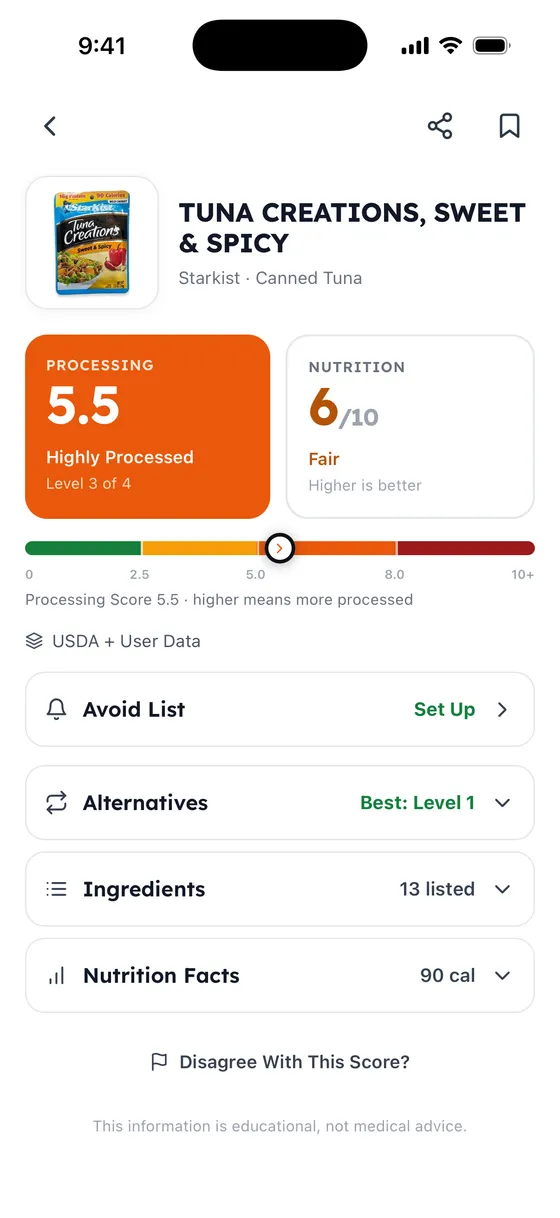
Frequently asked questions
What is chimichurri?
Chimichurri is a traditional Argentine herb sauce made from finely chopped parsley, garlic, oregano, red pepper flakes, red wine vinegar, and olive oil. It is served fresh alongside grilled meats, and made at home it is one of the least processed condiments.
How long does chimichurri last?
Homemade chimichurri lasts 1-2 weeks refrigerated. The vinegar and olive oil act as natural preservatives. The flavor actually improves after a few hours as the herbs infuse into the oil and vinegar.
Is chimichurri the same as salsa verde?
No. Chimichurri (Argentine) is parsley-based with oregano and vinegar. Italian salsa verde is similar but adds capers and anchovies. Mexican salsa verde is tomatillo-based. Made fresh, all three are minimally processed but use different ingredients and traditions.