
Key findings
- 1Traditional bone broth is a millennia-old food produced by thermal extraction of collagen, minerals, and amino acids from bones over 12-48 hours
- 2Yeast extract in commercial bone broth functions as hidden MSG; it provides free glutamic acid for umami flavor enhancement
- 3Bone broth that solidifies into a gel when refrigerated indicates genuine collagen extraction, distinguishing real broth from flavored water
Why is Bone Broth Level 2 on average?
Bone broth is produced by simmering animal bones (often with joints and connective tissue) in water for 12-48 hours. This extended cooking extracts collagen, which hydrolyzes into gelatin and eventually into individual amino acids (glycine, proline, hydroxyproline). The process also extracts minerals from the bone matrix, calcium, magnesium, and phosphorus dissolve into the liquid over time. This is purely thermal extraction, identical to stock-making practiced for millennia. The commercial complication: some brands boost savory flavor with "yeast extract"; autolyzed yeast that releases free glutamic acid, the same flavor compound as monosodium glutamate (MSG). This is technically a natural ingredient but is used specifically for its MSG-like umami enhancement. In our analysis, bone broth products average a Processing Score of 4.7, which is Level 2.
How 239 bone broth products break down
Share of products at each processing level, in our analysis.
Bone Broth brand comparison
From least to most processed in our database.
How to read a bone broth label
- 1
Simple bone broth lists bones (chicken, beef), water, vegetables, vinegar, and salt; recognizable kitchen ingredients
- 2
"Yeast extract" or "autolyzed yeast extract" is a concentrated source of free glutamate, functioning similarly to MSG
- 3
"Natural flavors" on bone broth labels often indicate industrial flavor enhancement beyond simple simmering
- 4
Bone broth that gels when refrigerated indicates high collagen extraction (which is a sign of long, traditional simmering
Ketzal for iPhone
Got Bone Broth At Home?
Scan yours in Ketzal to see how your exact product scores, not just the average, plus a less processed swap.
Scan It Free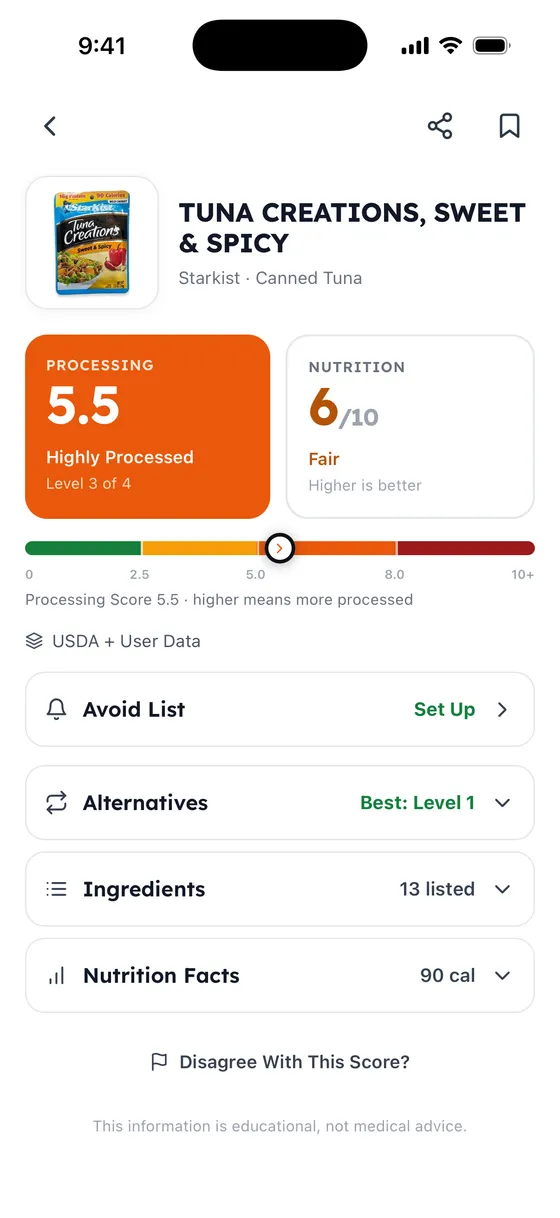
Frequently asked questions
Is store-bought bone broth as good as homemade?
It varies by brand. Store-bought bone broth listing only bones, water, vegetables, vinegar, and salt is comparable to homemade. Brands adding yeast extract, "natural flavors," or caramel color are more processed. Check the ingredient list and look for gelatin content as a quality indicator.
Does bone broth have collagen?
Yes, if properly made. Long simmering (12-48 hours) extracts collagen from bones and connective tissue, which hydrolyzes into gelatin. Bone broth that gels when refrigerated contains significant gelatin. Some commercial brands simmer for shorter periods and supplement with added gelatin or flavoring.
Is bone broth the same as stock?
Bone broth and stock are essentially the same product, bones simmered in water. "Bone broth" is a modern marketing term for what cooks have called stock for centuries. The processing is identical regardless of the label.