
Most Processed Energy Drinks
Each product is ranked by its own Processing Score, highest first. To keep the list from being one company's catalog, it shows at most two products from any one brand.
Energy Drinks by the Numbers
We scored every energy drinks product in our database: 910 items across 130 brands. In our analysis, about 90% land in the Highly or Ultra-Processed tiers.
What should you look for on the label?
- Check caffeine source: "caffeine" means synthetic; "green tea extract" is natural
- Avoid drinks with artificial sweeteners (sucralose, acesulfame-K) alongside sugar
- Taurine and B-vitamins are synthetic supplements, not food ingredients
- Zero sugar energy drinks often score higher due to additional artificial sweeteners and flavors
- No caffeine energy drink alternatives (herbal-based) exist but still contain processed extracts and flavors
Least Processed Energy Drinks
For context, here are the top 5 of the opposite ranking, the least processed energy drinks in our analysis.
Ketzal for iPhone
Find The Swap For What You Already Buy.
Scan a product you use and Ketzal suggests less processed options from the same category.
Find My Swap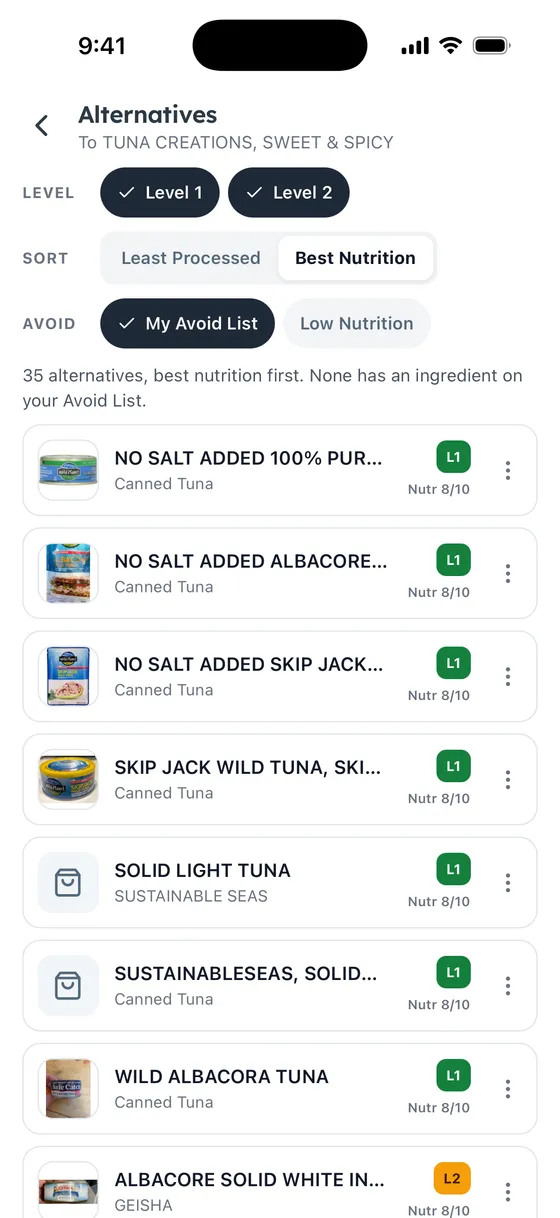
How are products scored?
Every product is evaluated using two independent scores. The Processing Score (lower is better) measures the degree of industrial processing based on ingredient analysis, including the presence of artificial additives, preservatives, and highly modified ingredients. The Nutrition Score (higher is better) rates overall nutritional quality, rewarding protein and fiber while penalizing excess sodium, added sugars, and saturated fat.
Products are assigned to one of four processing levels: Minimal (score ≤ 2.5), Processed (2.6 to 5.0), Highly Processed (5.1 to 8.0), and Ultra-Processed (above 8.0). Each product in the ranking is placed by its own Processing Score, not by its brand. Based on our analysis of 445K+ curated products from the USDA FoodData Central database. For a deeper look, see our Processing Score guide and Two-Score System explanation.
Frequently Asked Questions
Why are energy drinks so processed?
They are pharmaceutical-like formulations mixing synthetic caffeine, lab-produced taurine, industrial B-vitamins, artificial sweeteners, acidulants, and artificial flavors. Nothing in the formulation resembles food.
Which energy drinks have the highest caffeine content?
The most caffeinated energy drinks pack 200-300mg of caffeine per can, with some concentrated shots exceeding 300mg. Monster Energy caffeine content varies by product line, ranging from 140mg in a standard 16oz can to over 240mg in their extra-strength formulations. Higher caffeine content does not directly affect processing score, but brands with extreme caffeine loads tend to include more stimulant additives.
Are sugar-free energy drinks better?
From a processing standpoint, sugar-free versions often score higher because artificial sweeteners (sucralose, acesulfame-K) and additional flavoring agents are needed to replace sugar.
What is taurine and why is it in energy drinks?
Taurine is a synthetic amino acid added for its purported energy-enhancing effects. The taurine in energy drinks is industrially synthesized, not extracted from natural sources.