

Understanding the Two-Score System
Processing Score (1-32+)
Lower is Better
Measures how much a food has been processed, from single ingredients to ultra-processed.
- 1-2.5: Minimal
- 2.6-5.0: Processed
- 5.1-8.0: Highly
- 8.0+: Ultra
Nutrition Score (0-10)
Higher is Better
Measures nutritional quality by rewarding protein and fiber and penalizing sugar, sodium and saturated fat.
- 8-10: Excellent
- 5-7: Good
- 2-4: Fair
- 0-1: Poor
Key Principles
- Both Scores Matter: A product can have low processing but poor nutrition (like butter) or high processing but decent nutrition (like fortified cereal)
- Context is Important: Occasional treats with high processing scores are fine as part of a balanced diet
- Look for Balance: Aim for lower processing scores (under 5) and higher nutrition scores (5+) for everyday foods
Reading Processing Scores (1-32+)
Processing scores start at 1.0 for single ingredients and increase based on the number and type of processing steps and additives:
Minimal Processing (1-2.5)
Single ingredients or foods with minimal processing steps.
Processed (2.6-5.0)
Foods with some processing but still recognizable ingredients.
Ultra-Processed (8.0+)
Highly processed foods with many additives, preservatives, and artificial ingredients.
Reading Nutrition Scores (0-10)
Nutrition scores are calculated by adding points for protein and fiber and subtracting points for sugar, sodium, saturated fat, trans fat and cholesterol:
Positive Factors
- Protein: Strongest boost
- Fiber: Significant boost
- Fermented Dairy: Minor boost
Negative Factors
- Added Sugars: Strongest penalty
- Trans Fat: Strongest penalty
- Sodium: Significant penalty
- Saturated Fat: Significant penalty
Example: Why Single Ingredients Can Have Low Nutrition Scores
How Scores Work Together
The Sweet Spot
Look for foods with low processing scores (under 5) and high nutrition scores (5+) for everyday eating.
Trade-offs
Some foods have one good score but not the other. Consider your priorities and overall diet.
Common Score Patterns
- Whole Foods: Usually have excellent processing scores (1.0 for a single ingredient) but nutrition scores vary by food type
- Organic Products: “Organic” doesn’t guarantee low processing - organic cookies can still be ultra-processed
- Fortified Foods: May have high processing but good nutrition due to added vitamins and minerals
- Traditional Foods: Cultural foods like fermented products often balance moderate processing with good nutrition
Common Score Patterns & Examples
Score Pattern Guide
Excellent Both (Low Processing + High Nutrition)
Single ingredient whole foods with great nutritional profiles
Moderate Both (Balanced Processing + Nutrition)
Lightly processed foods with decent nutritional value
High Processing + Good Nutrition · Consider Context
Ultra-processed but nutritionally enhanced (fortified foods)
Low Processing + Poor Nutrition · Use Sparingly
Single ingredients that are nutritionally poor (high fat/sugar)
Poor Both (High Processing + Poor Nutrition) · Occasional Treats
Ultra-processed with poor nutritional profiles
Red Flags to Watch For
Processing Red Flags
- Score above 15. Indicates extensive processing with many additives
- Score above 25. Extreme processing, likely candy or highly processed desserts
- Long ingredient lists. Often correlate with higher processing scores
- Unpronounceable ingredients. Chemical additives increase processing scores
Nutrition Red Flags
- Score below 2. Very poor nutritional profile
- Score of 0. Often high in saturated fat, sodium, or added sugars
- High processing + low nutrition. Double red flag combination
- Missing nutrition score. Insufficient nutritional data available
Example: Ultra-Processed Organic
Organic doesn’t mean minimally processed!
Example: Poor Nutrition
Minimal processing but nutritionally poor
Green Flags to Look For
Processing Green Flags
- Score of 1.0. Single ingredient foods
- Score under 3.0. Minimal processing
- Short ingredient lists. Fewer additives and processing steps
- Recognizable ingredients. Whole foods and basic preparations
Nutrition Green Flags
- Score of 8+. Excellent nutritional profile
- Score of 5+. Good overall nutrition
- High protein foods. Get bonus points
- High fiber foods. Boost nutrition scores
Examples of Excellent Processing:
- Single grains/legumes: 1.0
- Plain flour: 1.0
- Pure spices: 1.0
Examples of Excellent Nutrition:
- Legumes/beans: 8-10
- Whole grains: 8-10
- Seeds: 8-10
Ketzal for iPhone
Check What's Already In Your Kitchen.
Scan a barcode, on the shelf or in your pantry, and see both scores in seconds. Free, no account needed.
Scan It Free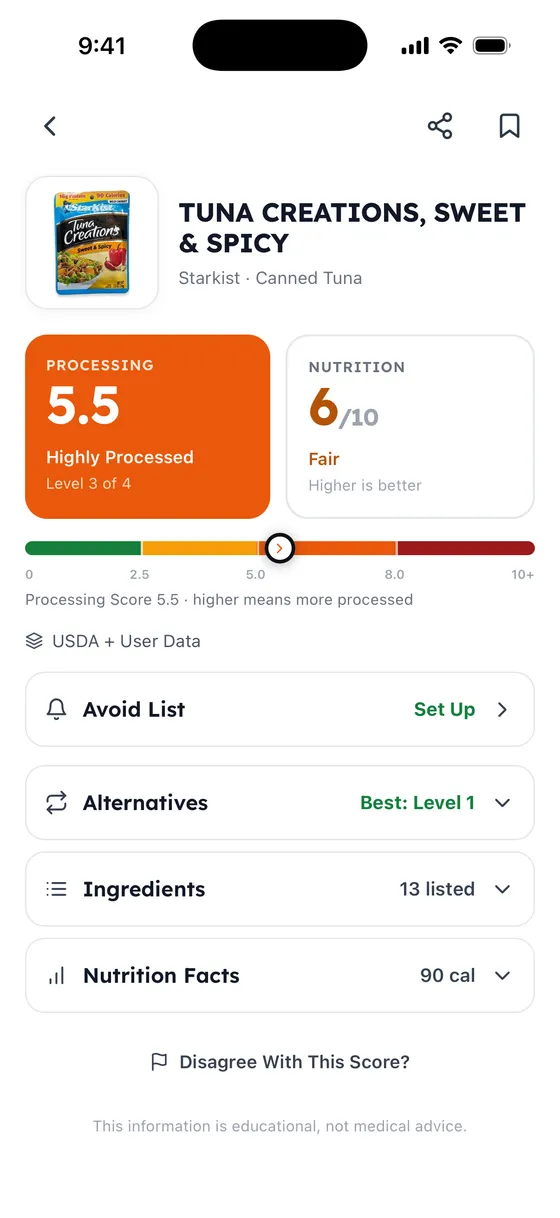
Quick Shopping Reference
Everyday Foods
Look for these score ranges for daily staples:
- Processing Score: Under 5
- Nutrition Score: 5 or higher
Examples: Whole grains, legumes, plain yogurt, simple sauces
Occasional Foods
Moderate choices for regular but limited consumption:
- Processing Score: 5-8
- Nutrition Score: 3-6
Examples: Breakfast cereals, prepared meals, crackers
Treat Foods
Save these for special occasions:
- Processing Score: 8+
- Nutrition Score: Under 3
Examples: Candy, cookies, chips, sugary drinks
Pro Shopping Tips
- Check both scores: Don’t rely on just one metric
- Consider frequency: Higher processing OK for occasional foods
- Read ingredients: Scores reflect what you’ll find in the list
- Compare similar products: Different brands vary significantly
- Don’t fear all processing: Some (like fermentation) can be beneficial
- Balance your day: Mix of different score ranges is fine